
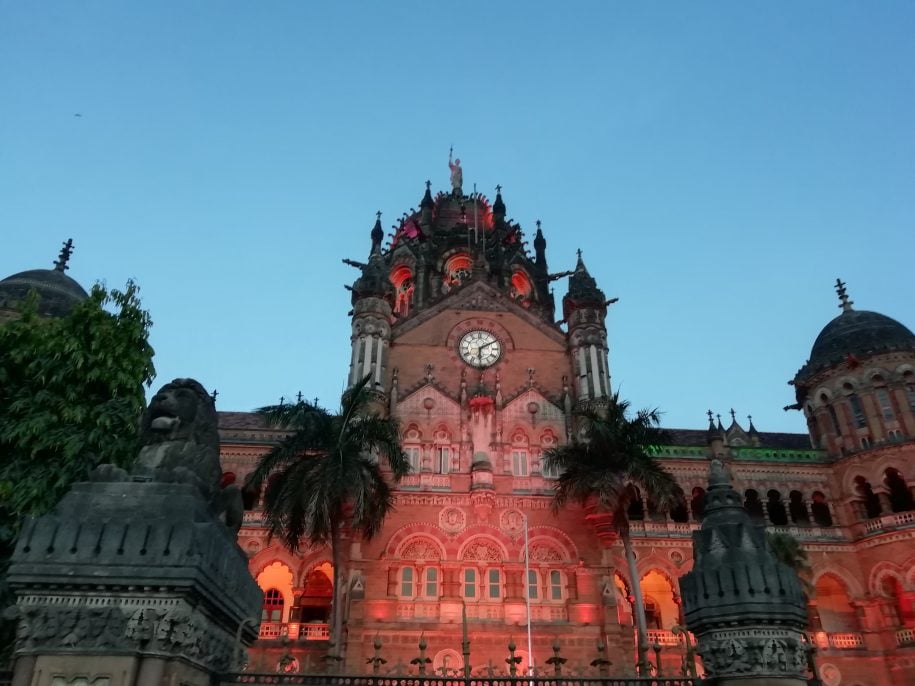
Mumbai is a city that tells its story in stone.
Not in museums or textbooks but in the buildings themselves. In the soaring Gothic arches of a railway station that handles more passengers every day than any other station on earth. In the sweeping Art Deco curves of apartment buildings that line one of the world’s most beautiful urban seafronts. In clock towers, law courts, libraries and cinemas that together form one of the most extraordinary concentrations of architectural heritage in all of Asia.
In 2018 UNESCO recognised what Mumbai’s own residents have always known. The Victorian Gothic and Art Deco ensembles of South Mumbai represent an outstanding universal value that belongs not just to India but to the entire world. They are now officially a UNESCO World Heritage Site, and the only place on earth where these two extraordinary architectural styles face each other across a single open maidan.
This complete guide to the Mumbai heritage walk covers everything you need to know about the city’s most extraordinary buildings, the stories behind them, and the best way to experience them in person. Whether you are a first time visitor from abroad or a Mumbaikar who has walked past these buildings every day without knowing their full story, this guide will change the way you see this city forever.
Why Mumbai’s Architecture Is Unlike Anything Else in the World
Mumbai was not always a city. In 1661 it was a collection of seven swampy islands with a population of a few thousand fishermen. The Portuguese gave it to the British as part of a royal dowry when Catherine of Braganza married King Charles II and the British promptly leased it to the East India Company for ten pounds a year. 5 Senses Tours What followed over the next two centuries was one of the most extraordinary urban transformations in history.
A global trading metropolis rose from the tidal flats. And with it came buildings of extraordinary ambition, confidence and beauty.
How Mumbai Became a Global Trading City and Why Its Buildings Reflect That Story
The emergence of Mumbai as one of Asia’s leading trading ports in the 19th century triggered a construction boom unlike anything the subcontinent had seen. The British colonial administration commissioned public buildings in the Victorian Gothic Revival style that was fashionable in Britain at the time, but with a crucial difference. In Mumbai these buildings were not simply imported wholesale from Europe. They were adapted, transformed and enriched with Indian architectural motifs, local materials and design responses to the tropical climate that made them something entirely new.
The result was a cityscape that expressed both imperial ambition and Indian creative genius simultaneously. Pointed arches appeared alongside peacock medallions. Gargoyles shared facades with lotus carvings. Clock towers referenced Big Ben while their stone was quarried from the hills of Maharashtra. These buildings were British in conception but Mumbaikar in character and they remain so to this day.
The UNESCO Recognition That Confirmed Mumbai’s Architectural Greatness
The Victorian Gothic and Art Deco Ensembles of Mumbai were inscribed as a UNESCO World Heritage Site in 2018, recognised for their outstanding universal value in illustrating the architectural and cultural exchange between the British colonial rulers and the local population, as well as the adaptation of European architectural styles to the Indian context. Companion-travels
The recognition covered two distinct architectural periods. The Victorian Gothic buildings of the Fort area, built primarily in the second half of the 19th century, represent the colonial city at the height of its imperial confidence. The Art Deco buildings of Marine Drive and the Oval Maidan, built between the 1930s and 1950s, represent a very different Mumbai. A city of the Indian middle class, embracing modernity, independence and a new sense of its own identity through a uniquely Bombay interpretation of a global architectural movement.
The Art Deco Ensembles of Mumbai represent the second largest collection of Art Deco buildings in the world after Miami. 5 Senses Tours Most people who visit Mumbai do not know this. A Mumbai heritage walk changes that immediately.
The Oval Maidan: The Only Place in the World Where Gothic and Art Deco Face Each Other
The Oval Maidan is unique in the world in architectural terms. It is the only place in the world where two styles of two different centuries are in such proximity. Victorian Gothic and Art Deco architecture face each other across the Oval Maidan. VoiceMap
On the eastern side stand the great Gothic public institutions of colonial Bombay. On the western side stand the sleek Art Deco residential buildings of a modernising Indian city. Between them stretches a cricket ground where Mumbaikars have played since the 19th century. The juxtaposition is extraordinary, completely unrepeatable and entirely unique to this city.
No other urban landscape in the world tells the story of two centuries of architectural ambition quite like the view across the Oval Maidan. It is the single most compelling reason to take a Mumbai heritage walk.
The Victorian Gothic Buildings of Mumbai: A Complete Guide
The Victorian Gothic buildings of South Mumbai were built during one of the most ambitious periods of urban construction in Indian history. Each one tells a specific story about colonial power, Indian ingenuity and the extraordinary city that was emerging from the tidal flats of the Arabian Sea.
Chhatrapati Shivaji Maharaj Terminus: The UNESCO Railway Station That Defies Belief
No building in Mumbai commands more immediate awe than the Chhatrapati Shivaji Maharaj Terminus, still known to many Mumbaikars simply as CST or VT. Built between 1878 and 1888 by architect Frederick William Stevens, the building blends Gothic elements with Indian traditional architectural motifs in a synthesis that is completely unlike anything built in Britain. Pointed arches appear alongside peacock medallions, gargoyles alongside Indian floral carving, a central dome topped by a figure of Progress rather than a Christian cross. 5 Senses Tours
CST is simultaneously one of the finest Victorian Gothic Revival structures in the world and one of the busiest railway stations on earth, with over three million daily commuters passing through its ornate arches. The contrast between its extraordinary architectural beauty and its role as the beating heart of Mumbai’s daily working life is one of the most remarkable things about this building. It is not a museum piece. It is alive.
On the Mumbai heritage walk with 5 Senses Walks you do not just admire CST from the outside. Your guide takes you inside the building, into the extraordinary Star Chamber booking hall with its Italian marble floors and soaring ceilings designed to address claustrophobia during rush hour. You ride a local train from this station, experiencing Mumbai the way its millions of daily commuters do, before continuing the walk through the Gothic heart of the city.
Rajabai Clock Tower: The Big Ben of Mumbai
Rising 85 metres above the University of Mumbai’s Fort campus, the Rajabai Clock Tower is one of the most beloved landmarks of South Mumbai and one of the finest examples of Victorian Gothic architecture anywhere in Asia. Built in 1878 and inspired directly by the Clock Tower of the Houses of Parliament in London, it was commissioned by stockbroker Premchand Raichand in memory of his mother Rajabai, who was a strict Jain and could not leave the house without observing the sun. The clock tower allowed her to know the time from her home nearby.
The story behind the tower is as characteristically Mumbaikar as the building itself. An act of profound filial devotion. A Jain stockbroker commissioning a Gothic clock tower from a British architect. A building that references Westminster but looks entirely at home in Bombay. This is Mumbai’s heritage in miniature.
The Bombay High Court: Where Justice and Mercy Watch Over the City
The Bombay High Court, designed by Colonel J.A. Fuller and completed in 1879, is one of the most imposing Gothic structures in South Mumbai. Its facade is topped by two famous statues, Justice holding her scales and Mercy in an attitude of compassion, which have presided over the legal life of the city for over 150 years.
The building’s Gothic towers and broad staircases communicate the permanence and authority that British colonial administration intended its public buildings to project. Yet the High Court, like CST and the Rajabai Tower, feels entirely at home in Mumbai rather than transplanted from somewhere else. The tropical climate shaped every design decision, from the depth of the verandas to the height of the ceilings, and the result is a building that is genuinely Indian in character despite its European stylistic origins.
H3: David Sassoon Library: The Jewish Banker’s Gift to Bombay
The David Sassoon Library and Reading Room is one of the most quietly extraordinary buildings on the Mumbai heritage walk and one of the least known by visitors. Built in 1847 and donated to the city by the Jewish banker and philanthropist David Sassoon, the library contains over 70,000 rare books and manuscripts and represents one of the most remarkable acts of civic generosity in Mumbai’s history.
The Sassoon family were Baghdadi Jews who came to Bombay in the 1830s and became one of the city’s most prominent trading dynasties. Their story is inseparable from the story of Mumbai as a global trading city, and the library they gave to the city is a physical expression of the extraordinary multicultural community that built Bombay into one of Asia’s greatest metropolises.
H3: Elphinstone College: Where India’s Greatest Leaders Were Educated
Elphinstone College, established in 1856, is a remarkable Gothic structure with one of the most illustrious alumni lists of any educational institution in India. Bal Gangadhar Tilak, Dr B.R. Ambedkar and Jamshedji Tata all studied here, making this building a direct physical connection to the intellectual and political foundations of modern India.
Walking past Elphinstone College on the Mumbai heritage walk is not simply an architectural experience. It is a reminder that these buildings were not just symbols of colonial power. They were also the spaces where the Indian minds that would eventually dismantle that colonial power were educated and formed.
The Art Deco Buildings of Mumbai: A Complete Guide
If the Gothic buildings of South Mumbai represent the 19th century city of empire, the Art Deco buildings of Marine Drive and the Oval Maidan represent something entirely different. A city coming into its own. An Indian city embracing modernity on its own terms.
Why Mumbai Has the World’s Second Largest Art Deco Collection
The Gothic Revival buildings tell of empire, ambition, and authority, while the Art Deco apartments speak of a confident, modernising India ready to embrace new styles and ways of life. Hoblets On The Go
The Art Deco movement arrived in Mumbai in the 1930s through a combination of factors that were uniquely Mumbaikar. Indian architects who had trained in Europe brought the style back with them. The opening of the Marine Drive seafront reclamation project created a blank canvas for a new kind of urban living. And a newly confident Indian middle class wanted homes and public buildings that expressed their modernity, their ambition and their freedom from the Gothic vocabulary of colonial power.
The Art Deco style in Mumbai also features Indian influences, such as motifs inspired by local flora and fauna, combined with the international Art Deco aesthetic. Companion-travels The result was something that architects and historians now recognise as a genuinely distinct style, sometimes called Indo-Deco, that is different from Art Deco anywhere else in the world and is found only in Mumbai.
H3: Eros Cinema: The Art Deco Masterpiece That Defined Bombay Glamour
Eros Cinema is one of the finest Art Deco buildings in Mumbai, built in 1938 by architect Sorabji Keikhushru Bhedwar with internal decorations by Fritz von Dreiberg. Its wedding-cake profile rising in tiers to a semi-circular tower is the most distinctive Art Deco silhouette on Marine Drive. 5 Senses Tours
The Eros Cinema represents a particular moment in Mumbai’s cultural history when cinema was the defining art form of a modernising city and the buildings that housed it were designed with the glamour and ambition that the movies themselves projected. The building earned Mumbai its UNESCO recognition alongside the Gothic structures and remains one of the most photographed buildings in the city.
Empress Court and the Art Deco Residential Heritage of South Mumbai
Empress Court represents the residential dimension of Mumbai’s Art Deco heritage, the apartment buildings that lined the seafront and changed the way the city’s emerging middle class lived. These buildings introduced new standards of urban living to Mumbai, with flat roofs, horizontal banding, geometric ornamentation and a relationship with light and air that was entirely different from the Gothic buildings of the previous century.
The Art Deco residential buildings of South Mumbai were built by and for Indians, not colonial administrators, and their design reflects the aspirations, the tastes and the cultural confidence of a community that was finding its own modern identity in the decades before independence.
Marine Drive and the Queen’s Necklace: Art Deco at Urban Scale
Marine Drive, the sweeping seafront boulevard that curves around Back Bay from Nariman Point to Chowpatty Beach, is the urban masterpiece that contains Mumbai’s greatest concentration of Art Deco buildings. When it was completed in the 1930s it represented the most ambitious urban planning project in the city’s history. When its streetlights are reflected in the Arabian Sea at night, creating the glittering arc that gave it the name Queen’s Necklace, it remains one of the most beautiful urban views in Asia.
Walking Marine Drive as part of a Mumbai heritage walk reveals the full breadth and ambition of the Art Deco project in this city. Building after building shows a different interpretation of the style, from the strictly geometric to the ornately decorative, from the purely European to the distinctly Indo-Deco, each one a piece of a collective statement about the city Mumbai wanted to become.
The Mumbai Heritage Walk With 5 Senses Walks: What to Expect
Reading about Mumbai’s extraordinary architectural heritage is one thing. Walking through it with an expert guide who can bring every building’s story alive is something entirely different and infinitely more rewarding.
What Makes the 5 Senses Walks Mumbai Architecture Walk Different
The Mumbai architecture walk by 5 Senses Walks is led by a cultural evangelist, not just a guide. The difference is significant. A guide shows you buildings. A cultural evangelist tells you the stories behind them, the human stories, the political stories, the economic stories and the architectural stories that together explain why Mumbai looks the way it does and why it matters.
The walk begins at CST, one of the world’s greatest buildings, and takes you inside it, an experience most visitors to Mumbai never have. You ride a local commuter train from the terminus, experiencing the city from the inside rather than as a spectator. You visit the David Sassoon Library, Elphinstone College, the Bombay High Court, the Rajabai Tower, Eros Cinema and Empress Court, with your guide bringing each one to life through stories that connect the buildings to the broader sweep of Mumbai’s extraordinary history.
Tripadvisor reviewers consistently describe the walk as one of the best things to do in Mumbai. One reviewer called it three hours of time travel. Another described it as the best way to understand a city. A third said simply that Mumbai has an incredible heritage and this walk makes it come to life.
Mumbai Heritage Walk Timings, Pricing and How to Book
The Mumbai architecture walk with 5 Senses Walks departs at 8am, 10am and 2pm daily, giving you flexibility to choose the time that suits your schedule. Early morning departures are recommended for international visitors who want to experience the buildings in the best light and with the most comfortable temperatures before the Mumbai day heats up fully.
Group walk pricing starts from Rs 1800 per person for groups of four or more, Rs 2000 per person for groups of two or three, and Rs 2500 for a single guest. Private walk options are also available from Rs 3500 per person for groups of four or more, offering a more personalised and intimate experience of the city’s architectural heritage.
The walk is approximately three hours long and covers the key Gothic and Art Deco buildings of South Mumbai in a compact, walkable circuit that begins and ends in the Fort area.
Book your Mumbai Heritage Walk with 5 Senses Walks today
The Best Time to Take a Mumbai Heritage Walk
October to February is the ideal season for a Mumbai heritage walk, when the weather is cool, dry and comfortable for three hours of walking through South Mumbai. The early morning departures at 8am are particularly magical during these months, when the light on the Gothic stone is at its most beautiful and the streets of the Fort area are still relatively quiet before the city’s working day begins fully.
The monsoon months from June to September bring their own dramatic beauty to Mumbai’s heritage buildings, with the Gothic stone darkening and gleaming in the rain and the Art Deco buildings taking on a deeply atmospheric quality. Experienced guides can adapt the walk to monsoon conditions and some guests find this the most memorable time to experience the city’s architecture.
Beyond the Heritage Walk: Mumbai’s Complete Cultural Experience With 5 Senses Walks
The Mumbai heritage walk is the beginning of what this city can offer a curious and engaged traveller. Mumbai’s cultural depth extends far beyond its extraordinary architecture into food, film, faith, commerce and the extraordinary daily life of one of the world’s greatest cities.
Other Walking Experiences in Mumbai With 5 Senses Walks
5 Senses Walks offers a portfolio of walking experiences across Mumbai designed for travellers who want to go beyond the surface and encounter the real city. From the food streets of the city to its ancient Buddhist cave heritage at Kanheri and the rock-cut temples of Karla and Bhaja on an ancient trade route, each experience is designed to reveal a dimension of Mumbai that most visitors never find.
Our cultural walking tours are available across more than 17 cities in India, from the Old City of Hyderabad and the heritage streets of Kolkata to the temple towns of Tamil Nadu and the French Quarter of Pondicherry. Every walk is led by a cultural evangelist with deep knowledge of and genuine passion for the place they are showing you.
Explore all Mumbai walks with 5 Senses Walks
Extend Your Mumbai Experience With 5 Senses Tours
Mumbai is a magnificent starting point for a deeper journey into India’s extraordinary heritage. Beyond the city, 5 Senses Tours offers expert guided experiences across the country designed for international travellers who want more than sightseeing.
From the ancient rock-cut temples of Ajanta and Ellora near Aurangabad to the ruined Vijayanagara Empire of Hampi, from the spiritual heart of Varanasi to the diamond fortresses and Nizam’s palaces of Hyderabad, the India that lies beyond Mumbai’s extraordinary skyline is waiting to astonish you.
Leave a Reply