
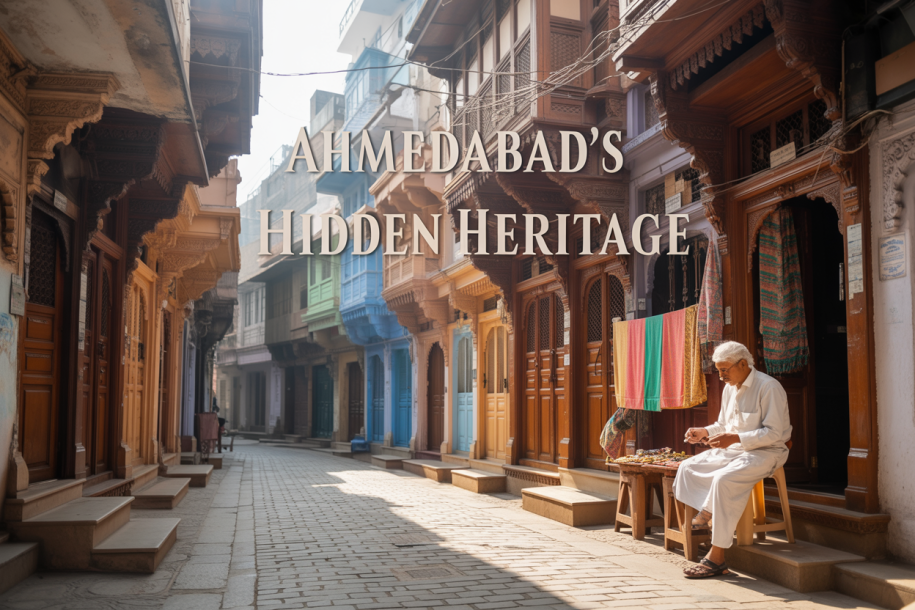
Ahmedabad’s heritage walk through the ancient pols of the walled city is one of the most extraordinary cultural experiences available in India. This UNESCO World Heritage City, India’s first to receive the designation, contains over 350 surviving pols, traditional residential clusters whose 600-year-old wooden havelis, hidden courtyards and master artisan communities have remained largely unchanged since Sultan Ahmed Shah’s city planning transformed a river bank into one of Asia’s greatest trading metropolises.
These narrow winding streets are not just old buildings. They are living museums where ancient architecture meets vibrant daily life. Every pol reveals intricate wooden carvings, hidden courtyards and bustling artisan workshops where skills are passed down through generations in a tradition of remarkable unbroken continuity.
This complete guide to the Ahmedabad heritage walk covers everything you need to know about the pols, the architecture, the artisan communities and the photography opportunities that make this one of the most rewarding walking experiences in India.
Ahmedabad Heritage Walk: Understanding the Historic Pol Architecture of India’s UNESCO Walled City
How Ahmedabad’s Pol System Emerged in the 15th Century as Sultan Ahmed Shah’s Grand Urban Vision
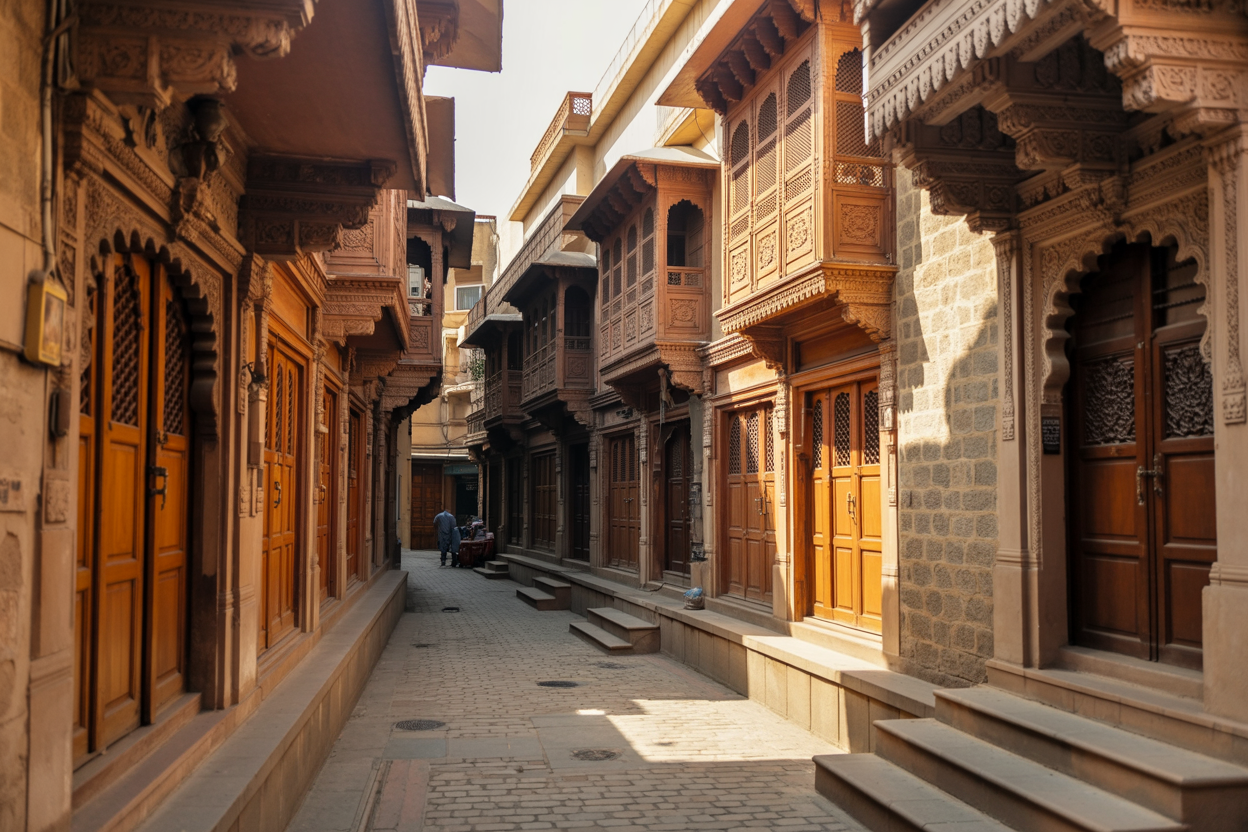
Ahmedabad’s pol system emerged in the 15th century as Sultan Ahmed Shah’s grand urban vision took shape. These tightly-knit residential clusters weren’t random developments but carefully planned neighborhoods designed around community bonds and shared identities. Originally, each pol housed members of specific trades, castes, or religious groups, creating a mosaic of specialized districts throughout the walled city.
The genius of pol planning lies in its organic growth pattern. Streets branched out like tree limbs, creating natural buffers against external threats while fostering internal unity. Wealthy merchants and artisans built their homes around central courtyards, with narrow lanes connecting different family compounds. Over centuries, these settlements expanded vertically and horizontally, accommodating growing populations while maintaining their intimate character.
What started as practical housing solutions evolved into cultural ecosystems. Each pol developed its own dialect variations, festival traditions, and business networks. The Gujarati concept of “Mahajan” – trade guilds – influenced pol organization, with entire neighborhoods specializing in textiles, metalwork, or spice trading.
By the 19th century, Ahmedabad contained over 600 pols, each with distinct personalities shaped by their residents’ professions and origins. Today, around 350 pols survive, though many have transformed from their original purposes as urbanization reshaped the old city’s demographics and economic landscape.
Chowks, Jharokhas and Jaalis: The Extraordinary Architectural Features That Define Every Ahmedabad Pol
Walking through any pol reveals a distinctive architectural language that speaks to centuries of refined craftsmanship. The defining feature remains the “chowk” – central courtyards that serve as the neighborhood’s beating heart. These open spaces provide natural ventilation while creating gathering spots for festivals, ceremonies, and daily social interactions.
Intricate wooden facades showcase Gujarat’s legendary woodcarving traditions. Three-story havelis display elaborate “jharokhas” (balconies) and “jaalis” (latticed screens) that offer privacy while allowing air circulation. The ground floors typically housed shops or workshops, middle floors served as family living spaces, and top floors provided storage or guest accommodations.
The pol’s narrow lanes follow ancient urban design principles perfectly suited to Gujarat’s climate. High walls create cooling shadows, while the maze-like layout channels breezes through interconnected passages. Strategic placement of “chabutaras” (raised platforms) along these lanes provides rest spots and informal meeting places for residents.
Religious architecture punctuates every pol through small temples, mosques, or “derasars” (Jain temples) tucked into corners or central locations. These sacred spaces anchor community identity while showcasing regional artistic styles through stone carving, metalwork, and colorful tile decoration.
Water management systems reveal sophisticated engineering through wells, “vavs” (stepwells), and channels that supplied entire neighborhoods. Many pols still contain original stone-lined wells that once served multiple families within walking distance.
Otla Culture and Community Life: How Ahmedabad’s Pols Created the World’s First Gated Communities
Pol life revolves around shared experiences that bind neighbors into extended families. Morning routines unfold predictably as women gather around community wells, exchanging news while filling brass vessels. Children play cricket in narrow lanes while elderly residents observe from carved wooden balconies, creating natural supervision networks that keep everyone safe.
Festival celebrations transform entire pols into vibrant stages. During Navratri, courtyards become dance floors where generations unite in traditional “garba” circles. Diwali illuminates every balcony and doorway as residents compete in elaborate lighting displays. These collective celebrations strengthen bonds that transcend individual households.
The “otla” culture defines pol social dynamics – these raised platforms outside homes serve as semi-public spaces where neighbors gather for evening conversations, card games, or business discussions. Women often prepare vegetables together on otlas while sharing family stories and local gossip. This seamless blend of private and communal space creates support systems that modern apartment living rarely matches.
Traditional pol governance operates through informal councils where respected elders mediate disputes and organize community projects. These systems maintain order without formal authorities, relying instead on shared values and mutual respect developed through generations of coexistence.
Food culture flourishes through shared kitchens during weddings or religious events, where dozens of women collaborate on elaborate feasts. Recipe traditions pass between households, creating distinctive pol-specific variations of Gujarati cuisine that reflect each community’s unique heritage and influences.
Preservation Challenges: Why Ahmedabad’s UNESCO Pols Are Fighting for Survival in the Modern Age
Many original pol families have migrated to modern suburbs, leaving behind properties that new residents struggle to maintain. Traditional havelis require specialized restoration techniques using lime mortar, teak wood, and stone carving skills that few contemporary craftsmen possess. The cost of authentic restoration often exceeds the financial capacity of current residents.
Rapid urban development pressures threaten pol boundaries as developers eye valuable old city land. Some residents sell heritage properties to builders who demolish intricate wooden structures for modern concrete apartments. These developments disrupt the architectural harmony and community dynamics that define authentic pol environments.
Infrastructure challenges compound preservation difficulties. Narrow lanes weren’t designed for modern vehicles, creating access problems for emergency services and goods delivery. Electrical and plumbing upgrades often require modifications that compromise original architectural integrity. Many pols lack adequate sewage systems, leading to sanitation issues that drive residents away.
Government preservation efforts face bureaucratic hurdles and funding limitations. While Ahmedabad’s old city holds UNESCO World Heritage status, translating international recognition into effective local conservation remains challenging. Property ownership disputes and unclear documentation create legal obstacles that delay restoration projects.
Climate change adds new threats through increased rainfall and temperature fluctuations that accelerate wooden structure deterioration. Traditional materials require regular maintenance cycles that contemporary residents often cannot sustain, leading to gradual decay of irreplaceable architectural elements.
However, growing awareness among young Gujaratis and international heritage organizations offers hope. Community-led preservation initiatives combine traditional knowledge with modern conservation techniques, creating sustainable models for protecting these architectural treasures while accommodating contemporary living needs.
The best way to experience the full depth of Ahmedabad’s extraordinary pol heritage is with an expert cultural guide who knows the families, the stories and the hidden corners that most visitors walk past completely. Our Ahmedabad Heritage Walk takes you deep into the living heritage of India’s first UNESCO World Heritage City with cultural evangelists who bring 600 years of pol history to life in a way that independent exploration simply cannot match. For private tours in and around Ahmedabad, visit Ahmedabad Tours.
Navigating Ahmedabad’s Old City: How to Explore the Pol Networks of the Walled City
Mapping the Interconnected Pol Networks of Ahmedabad’s 600-Year-Old Walled City
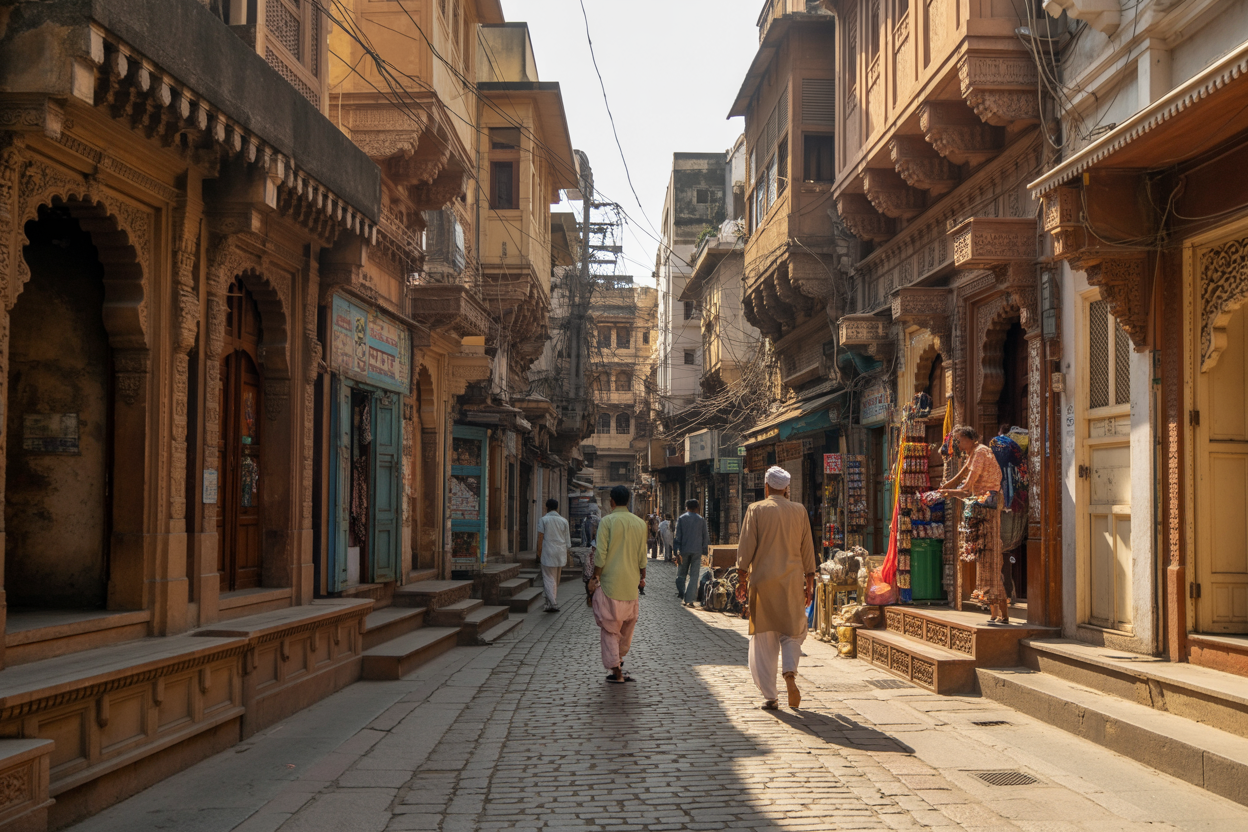
The old city of Ahmedabad spreads out like a spider’s web, with each pol connecting to others through a complex system of narrow lanes and byways. These residential clusters formed organically over centuries, creating a network that can confuse even longtime residents. The main arteries branch into smaller passages, which then split into even narrower walkways leading to individual households.
Walking through these neighborhoods reveals how different communities established their own territories while remaining connected to the broader urban fabric. The Muslim quarters flow into Hindu sections, with Jain communities occupying their own distinct areas. Each group maintained its identity while sharing common pathways and commercial spaces.
The beauty of this layout lies in its organic growth pattern. Unlike planned cities with rigid grids, these pols evolved naturally as families expanded and new residents arrived. Streets curve and bend, creating unexpected intersections where multiple pathways converge. Some lanes dead-end at private courtyards, while others open onto busy marketplaces.
Understanding this network requires patience and a willingness to get lost. Local residents often serve as informal guides, pointing visitors toward hidden gems tucked away in the maze. The interconnected nature means you can enter one pol and emerge in a completely different neighborhood, having discovered fascinating architectural details and community spaces along the way.
Hidden Courtyards and Secret Passages: What Every Ahmedabad Heritage Walk Reveals Behind the Facades
Behind the unassuming facades of pol houses lie some of Ahmedabad’s most enchanting spaces. Traditional homes feature central courtyards called ‘chowks’ that serve as the heart of family life. These open-air spaces provide natural light and ventilation while creating private gathering areas away from the bustling streets outside.
Many of these courtyards remain invisible from the main pathways, accessible only through narrow entrance gates or indirect passages. Families designed these spaces as peaceful retreats where women could move freely without being seen by strangers. The courtyards often feature intricate stonework, carved pillars, and decorative water features that have survived for centuries.
Secret passages connect different parts of the same house or even link neighboring properties. These hidden routes allowed residents to move between buildings without using public streets, providing security during uncertain times. Some passages lead to underground storage areas or connect to shared wells that served entire neighborhoods.
Bird’s-eye balconies called ‘jharokhas’ overlook these courtyards, creating layered viewing perspectives that photographers find irresistible. The interplay of light and shadow changes throughout the day, transforming these spaces into natural studios for capturing the essence of traditional architecture.
Carved Wooden Doorways of the Pols: Reading the Symbolic Language of Ahmedabad’s Heritage Architecture
The entrance to each pol house tells a story through its carved wooden doorway. These elaborate portals represent far more than simple architectural features – they communicate the family’s social status, religious beliefs, and cultural identity to anyone who knows how to read the symbols.
Intricate floral patterns carved into the door frames often represent prosperity and growth. Lotus motifs symbolize purity and spiritual awakening, while mango patterns suggest fertility and abundance. Geometric designs reflect Islamic influences, creating stunning visual displays that blend different artistic traditions.
Many doorways feature protective symbols meant to ward off evil spirits and bring good fortune to the household. The ‘kalash’ or water pot design appears frequently, representing abundance and hospitality. Some doors display the ‘swastika’ symbol, an ancient sign of good luck and prosperity in Hindu culture.
The size and elaborateness of a doorway traditionally indicated the wealth and importance of the family living behind it. Merchant families often commissioned the most ornate carvings, displaying their success through artistic patronage. Religious motifs varied according to the community – Hindu homes might feature images of deities, while Jain houses often displayed symbols representing their spiritual beliefs.
These doorways have weathered centuries of monsoons and daily use, yet many retain their original beauty. The skilled craftsmen who created these masterpieces passed their techniques down through generations, ensuring that each entrance remained a unique work of art.
Every carved doorway in Ahmedabad’s pols is a story waiting to be told by someone who knows how to read it. Our Ahmedabad heritage walk with 5 Senses Tours includes expert guided access to the most extraordinary pol architecture in the walled city, with cultural evangelists who can explain the symbolic language behind every carved motif, every jharokha and every hidden courtyard you encounter. For private tours in and around Ahmedabad, visit Ahmedabad Tours.
Artisan Communities of Ahmedabad’s Pols: Master Craftsmen Preserving 600 Years of Gujarat Heritage
Living Traditions: How Ahmedabad’s Pol Artisans Pass Down Centuries of Craft Knowledge Without Written Records
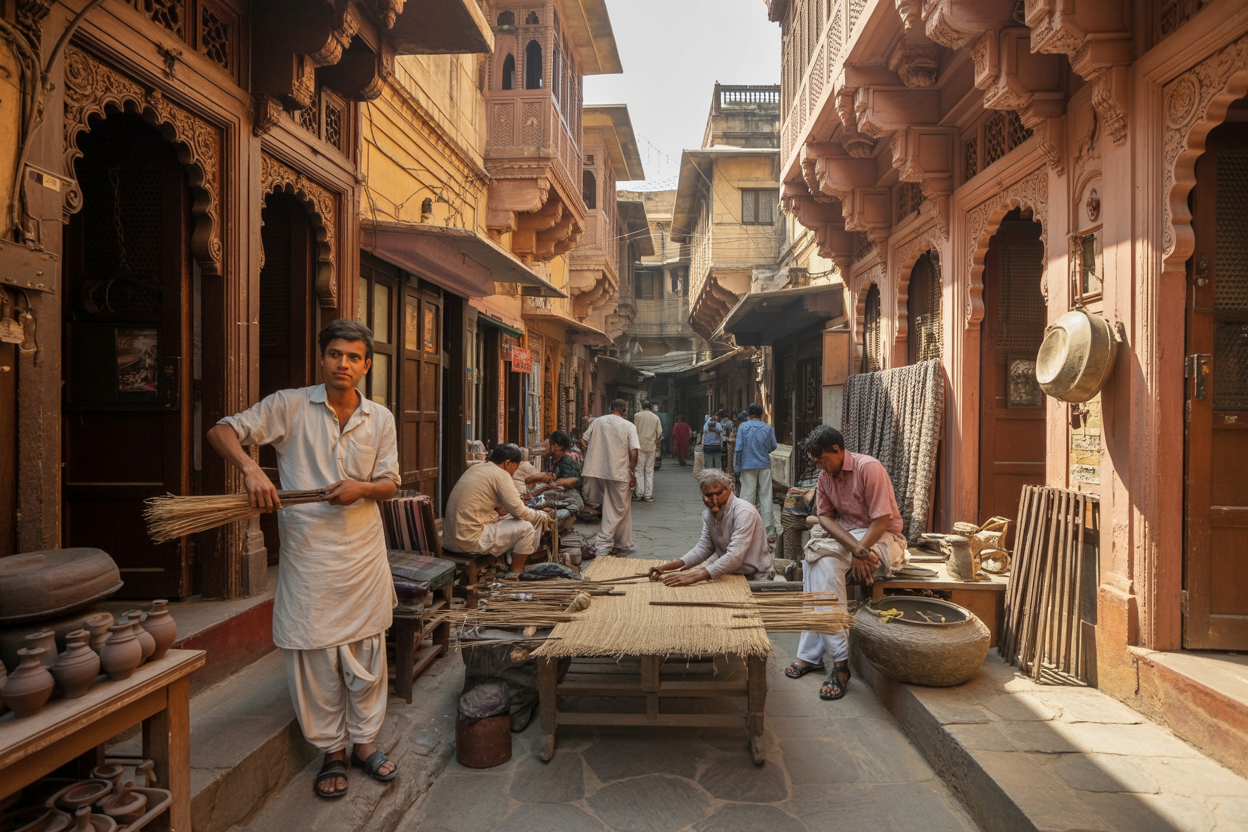
Walking through the narrow lanes of Ahmedabad’s pols, you’ll encounter artisans whose families have practiced the same craft for generations. These master craftsmen represent living links to India’s rich cultural heritage, working with tools and techniques passed down through bloodlines spanning centuries.
The knowledge transfer happens organically within these communities. Young apprentices sit beside their fathers and grandfathers, absorbing skills through observation and gradual participation. This intimate learning environment creates masters who understand not just the technical aspects of their craft, but the cultural significance behind every creation.
Many of these craftsmen work from small workshops tucked into ground floors of traditional havelis. The rhythmic sounds of their work become part of the pol’s daily symphony – the gentle tap of hammers, the whisper of silk threads being drawn, and the scraping of carving tools against wood.
Patola Weaving, Bandhani and Block Printing: The Extraordinary Textile Traditions of Ahmedabad’s Pol Communities
The pols house some of Gujarat’s most skilled textile artisans, particularly those specializing in traditional weaving techniques. These weavers create stunning fabrics using ancient handloom methods that produce textures and patterns impossible to replicate with modern machinery.
Patola weaving stands as one of the most prestigious crafts found within these communities. The double ikat technique requires extraordinary precision, with both warp and weft threads dyed before weaving begins. A single patola saree can take months to complete, representing thousands of hours of meticulous work.
Block printing workshops dot various pols, where artisans hand-carve wooden blocks and use natural dyes to create intricate patterns on fabric. These craftsmen work with vegetable dyes derived from plants like indigo, turmeric, and madder root, creating colors that age beautifully and carry deep cultural meaning.
Bandhani artists practice the ancient tie-dye technique, creating thousands of tiny knots in fabric before dyeing to produce characteristic dotted patterns. The precision required to create perfect circles and maintain consistent spacing across an entire garment demonstrates the extraordinary skill these artisans possess.
Wood Carving in the Pols: The Master Craftsmen Whose Work Graces Ahmedabad’s Most Important Heritage Buildings
Traditional wood carving thrives within several pols, where artisans create everything from intricate architectural elements to decorative household items. These craftsmen work primarily with teak and other hardwoods, using hand tools that have remained unchanged for centuries.
The carving techniques vary by family tradition and regional style. Some specialize in deep relief work featuring religious motifs and mythological scenes, while others focus on geometric patterns inspired by Islamic design principles. The level of detail achieved using only hand tools often leaves viewers amazed.
Many of these carvers accept custom commissions for temple restoration projects, haveli renovations, and private collectors. Their work graces some of Ahmedabad’s most important historical buildings, where modern restoration efforts specifically seek out these traditional craftsmen to maintain authentic architectural integrity.
Training in wood carving begins early, with children learning to handle basic tools and understand wood grain patterns. The progression from simple cuts to complex three-dimensional compositions takes years of dedicated practice under master supervision.
Silver Jewellers and Brass Workers: The Metalworking Traditions Hidden in the Ground Floors of Ahmedabad’s Havelis
The metalworking traditions within Ahmedabad’s pols encompass both jewelry making and ceremonial artifact creation. These artisans work with silver, brass, and occasionally gold, using techniques like repoussé, chasing, and granulation that date back thousands of years.
Silver jewelry makers specialize in traditional Gujarati designs, creating pieces worn during festivals and ceremonies. Their work includes intricate anklets, nose rings, and ceremonial jewelry sets that follow ancient design principles while incorporating contemporary wearability.
Brass workers create both functional and decorative items, from traditional water vessels to ornate oil lamps used in religious ceremonies. The skill required to achieve perfect symmetry and smooth finishes using only hand tools represents generations of accumulated knowledge.
Some metalworkers focus on creating miniature sculptures and decorative panels featuring religious themes. These pieces often incorporate multiple metals and require advanced techniques like damascening, where precious metals are inlaid into base metal surfaces to create stunning contrasts.
The artisan traditions of Ahmedabad’s pols are among the most extraordinary surviving examples of ancient Indian craftsmanship and are best experienced with a guide who has built personal relationships with the master craftsmen themselves. Our Ahmedabad walks include visits to working artisan workshops in the pols where you can watch patola weavers, wood carvers and metalworkers practice skills that have been passed down through the same families for generations. For travellers wanting to explore the wider craft heritage of Gujarat, our Ahmedabad tours can be extended to include the extraordinary Indus Valley heritage of Dholavira and Lothal, two of the most remarkable ancient sites in India.
Daily Life in Ahmedabad’s Pols: The Human Stories That Make Every Heritage Walk Unforgettable
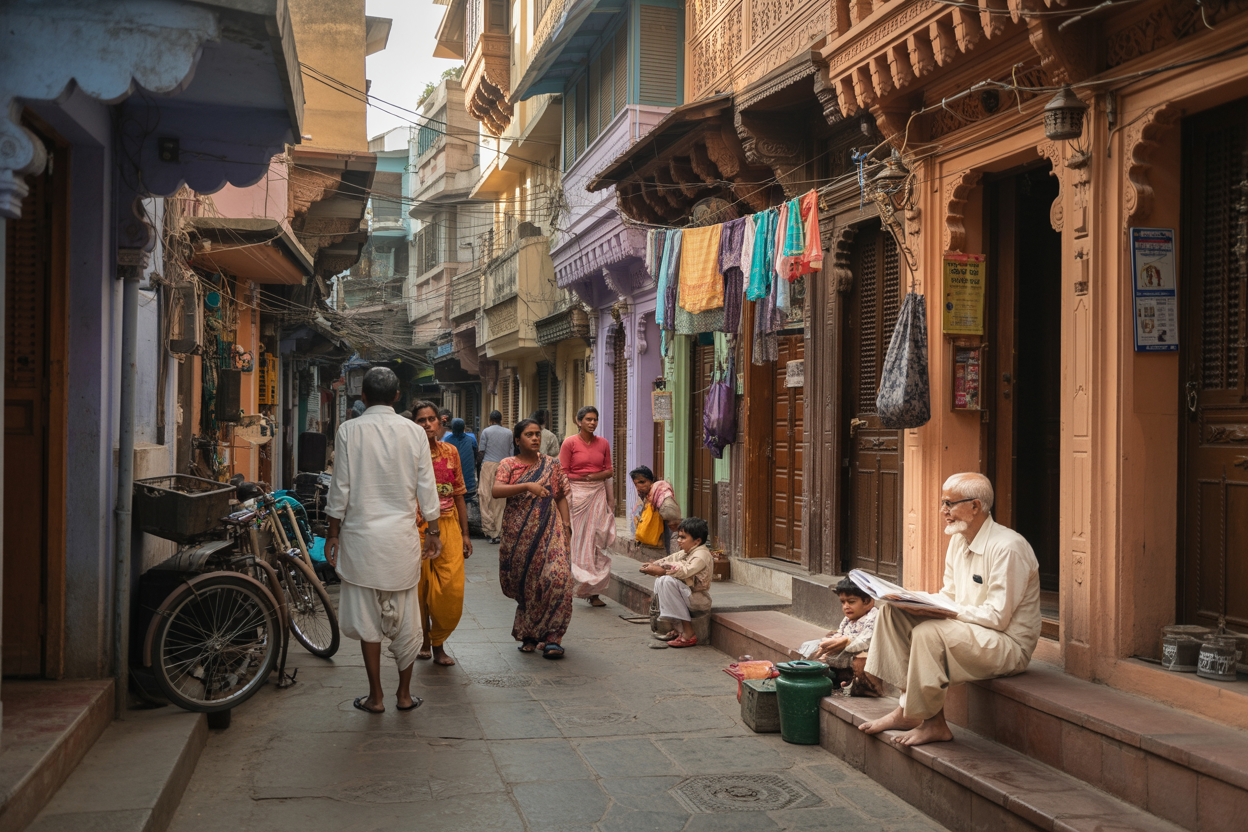
Dawn in the Pols: The Morning Rituals of Ahmedabad’s Old City That Have Never Changed
The pols come alive at dawn with a symphony of daily rituals that have remained unchanged for centuries. As the first rays of sunlight filter through narrow lanes, you’ll witness elderly women drawing intricate rangoli patterns at their doorsteps using rice flour and vermillion. These geometric designs serve as both artistic expression and spiritual protection for the household.
Water wells scattered throughout the neighborhoods become natural gathering spots where residents share news and gossip while collecting their daily supply. The rhythmic sound of brass vessels echoes through stone corridors as women wait their turn, their colorful saris creating beautiful contrasts against weathered walls.
Shared courtyards transform into communal kitchens during early hours, with families preparing tea over small fires. The aroma of cardamom and ginger wafts through interconnected passages, drawing neighbors into spontaneous conversations. These spaces reveal the true essence of pol living – privacy within community bonds.
Photographing these moments requires patience and respect. Position yourself quietly in corners where natural light streams through carved wooden balconies. The interplay of shadows and morning light creates dramatic compositions that tell stories of tradition and continuity. Watch for elderly men gathered around carved pillars sharing newspapers, their weathered hands gesturing animatedly as they discuss local affairs.
Navratri, Diwali and Festival Life: How Celebrations Transform Ahmedabad’s Pols Into Living Theatre
Festival seasons turn the pols into vibrant theater stages where entire communities become performers. During Navratri, narrow alleys explode with color as families hang bright fabrics and marigold garlands from every available surface. Shared courtyards become dance floors where multiple generations move together in traditional steps passed down through families.
Diwali brings magical transformations as every household contributes to collective lighting displays. Oil lamps line ancient staircases while colored powders create temporary murals on walls. The architectural features of pols – carved brackets, wooden shutters, and stone jalis – become natural frames for festival decorations.
Religious processions wind through labyrinthine streets, with musicians and dancers adapting to the intimate scale of pol architecture. Unlike broad city streets, these narrow passages create acoustic chambers that amplify singing and drumming, making every celebration feel intensely personal and communal simultaneously.
Capture these celebrations by focusing on details that show community collaboration. Look for moments when neighbors help each other hang decorations or when children excitedly run between houses carrying festival treats. The key lies in documenting not just the visual spectacle but the human connections that make these spaces special. Use wide-angle lenses sparingly – the beauty often lies in intimate moments framed by ancient doorways and carved wooden elements.
Children in Ancient Courtyards: The Extraordinary Continuity of Daily Life in Ahmedabad’s Heritage Pols
Children transform centuries-old courtyards into timeless playgrounds where imagination bridges past and present. These shared spaces, originally designed for community gatherings and household activities, now echo with laughter as kids invent games using architectural features as natural playground equipment.
Stone steps become slides, carved pillars turn into hiding spots for hide-and-seek, and raised platforms serve as stages for impromptu performances. Watch children navigate these spaces with inherited knowledge, understanding which surfaces are safe for climbing and which corners offer the best acoustics for their games.
The most compelling photographs emerge when traditional architecture frames contemporary childhood. A girl in a bright pink dress swinging from carved wooden brackets creates beautiful juxtaposition between old and new. Boys playing cricket in narrow passages demonstrate how community life adapts to historical constraints while maintaining its essential character.
These courtyards often feature raised water tanks or decorative wells that become focal points for group activities. Children gather around these structures for storytelling sessions led by grandparents, creating multi-generational scenes rich with cultural transmission.
Photographing children requires building trust with families and approaching with genuine curiosity rather than intrusion. Natural light filtering through carved screens creates beautiful portrait opportunities, while action shots benefit from the confined spaces that keep subjects within frame naturally. The worn stone surfaces and weathered wood provide rich textures that add depth to images of youthful energy.
The daily life of Ahmedabad’s pols is most vividly experienced in the company of a guide who is known and trusted by the communities themselves. Our Ahmedabad heritage walk with 5 Senses Tours gives international travellers from around the world genuine access to the living community of the pols, not just the architecture, creating an encounter with the extraordinary continuity of Gujarati urban culture that is available nowhere else in India.
Essential Photography Tips for Pol Exploration
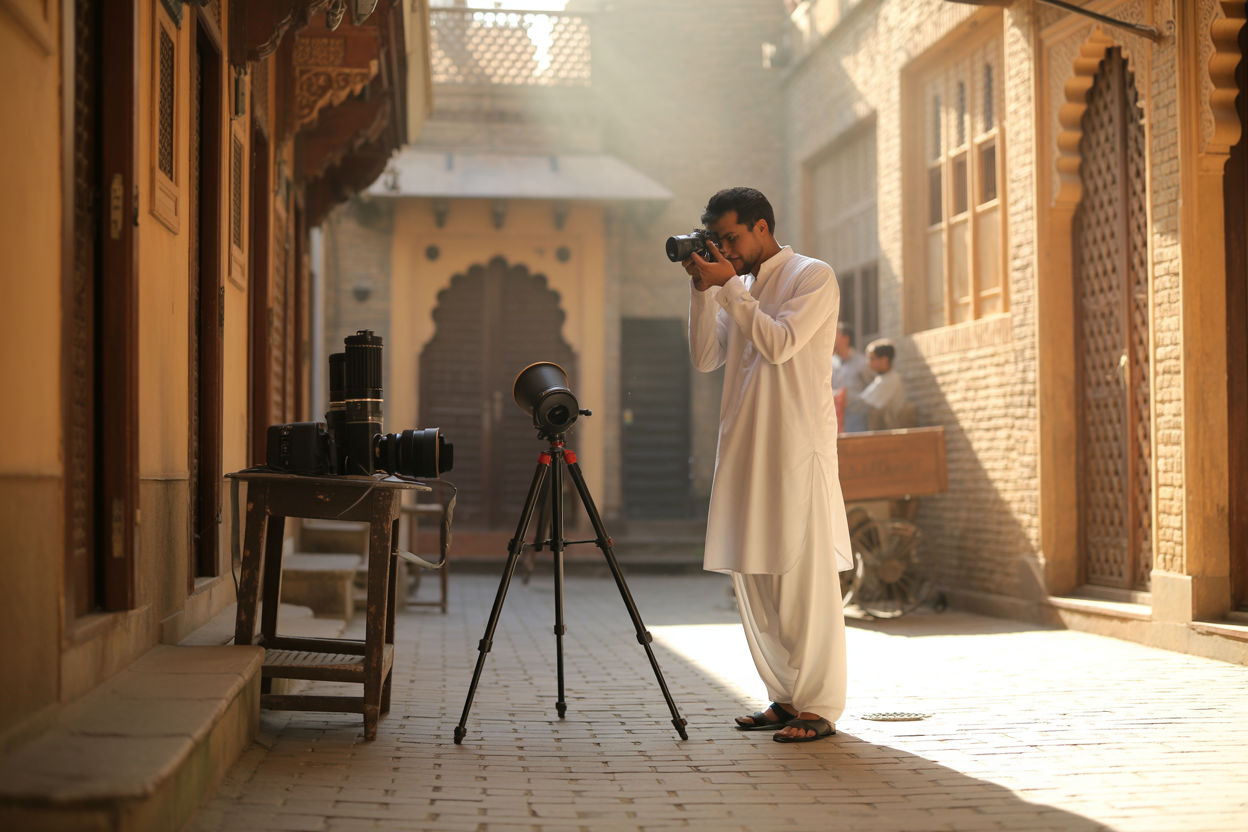
Photography Guide for Ahmedabad’s Heritage Walk: How to Capture the Pols at Their Most Extraordinary
The golden hour transforms pol architecture into something magical. Early morning light, typically between 6:30-8:30 AM, creates perfect conditions for capturing intricate wooden carvings and ornate balconies. The low angle highlights texture and depth in traditional facades while avoiding harsh shadows that can obscure delicate details.
Overcast days work wonders for pol photography. The soft, diffused light eliminates extreme contrasts and allows you to capture both shadowed courtyard areas and brightly lit upper stories in a single frame. This natural softbox effect reveals subtle color variations in weathered wood and stone that direct sunlight often washes out.
Blue hour photography opens up creative possibilities for capturing pols with artificial lighting. Many heritage homes illuminate their traditional facades at dusk, creating warm amber glows against the deepening sky. Use a tripod and experiment with longer exposures to blend natural and artificial light sources.
Photographing Pol Residents: How to Build Trust and Capture Authentic Moments in Ahmedabad’s Living Heritage
Building genuine connections beats sneaking candid shots every time. A simple “Namaste” and gesture toward your camera usually earns permission and often leads to wonderful conversations about family history and pol traditions. Many residents take pride in their heritage homes and gladly share stories behind ornate doorways and courtyards.
Children playing in narrow alleys make compelling subjects, but always ask parents first. Offering to share photos via WhatsApp or email creates goodwill and shows you value the community as more than just a photographic backdrop. Many families appreciate receiving quality images of their children or grandparents.
During festivals and celebrations, residents often welcome photographers who show genuine interest in cultural traditions. Religious ceremonies, wedding preparations, and community gatherings offer incredible visual opportunities when approached with proper respect and timing.
Camera Equipment for Ahmedabad’s Narrow Pol Lanes: What to Bring and Why
Wide-angle lenses between 14-24mm capture the towering walls and intricate overhead connections between buildings. These lenses help convey the enclosed, intimate feeling of pol streets while including architectural details that tell the complete story.
A sturdy tripod becomes essential in low-light conditions common within narrow passages. Carbon fiber models offer the best balance of stability and portability when navigating tight spaces and crowded areas.
Prime lenses like 35mm or 50mm excel at isolating architectural details and creating intimate portraits of residents. Their wider apertures perform better in shadowed areas than zoom lenses, and their compact size makes them less intrusive in close quarters.
Consider bringing a small LED panel or reflector for fill lighting. Harsh overhead sun creates deep shadows in narrow alleys, and subtle fill light can reveal details in traditional woodwork and metalwork without overpowering the natural ambiance.
Composition Techniques for the Pols: How to Create Extraordinary Images in Confined Heritage Spaces
Vertical compositions work beautifully in narrow pol streets. Turn your camera 90 degrees to emphasize the towering walls, hanging balconies, and architectural layers that stack vertically rather than spreading horizontally.
Leading lines become your best friend in confined spaces. Ancient drainage channels, decorative floor patterns, and overhead wooden beams naturally guide viewers’ eyes through complex scenes. Use these elements to create depth and movement in otherwise static architectural shots.
Frame within frame compositions add visual interest and context. Shoot through ornate doorways, carved window screens, or architectural arches to create natural borders that focus attention on your main subject while showing the surrounding environment.
Look up frequently. Pol architecture reveals its most stunning details in upper stories and rooflines. Intricately carved brackets, traditional bird houses, and connecting bridges between buildings create compelling compositions when viewed from ground level looking skyward.
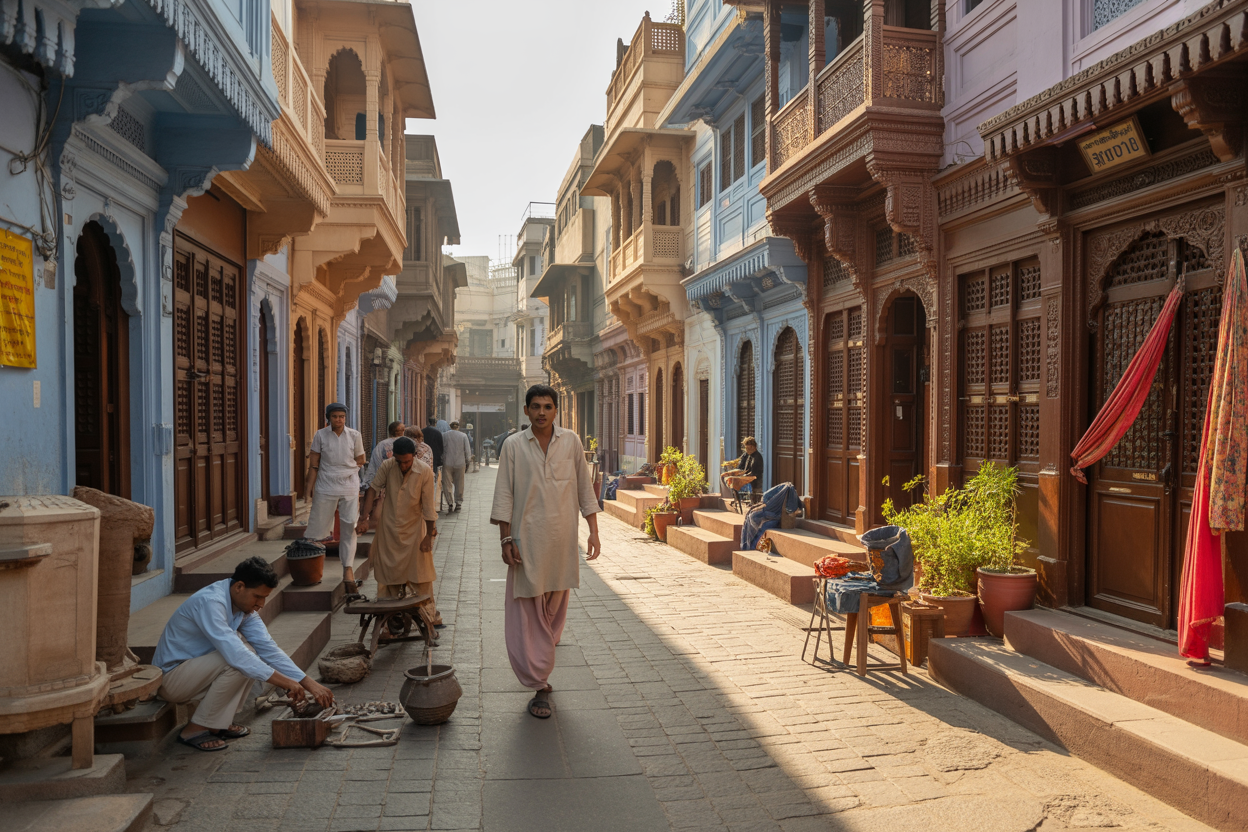
The best photographs from Ahmedabad’s pol heritage walk are taken by those who know where to be and when. Our Ahmedabad tours include early morning guided walks through the pols during golden hour, giving photographers access to the most extraordinary light and the most atmospheric moments of the day with an expert guide who knows exactly which lanes, which courtyards and which doorways reward the patient photographer most generously.
The pols of Ahmedabad offer an incredible window into India’s living heritage, where centuries-old architecture houses vibrant communities that continue traditional crafts and customs. These maze-like neighborhoods aren’t just tourist attractions—they’re breathing examples of how historic urban planning can create sustainable, close-knit communities. Walking through these narrow lanes reveals intricate wooden carvings, ornate facades, and bustling workshops where artisans practice skills passed down through generations.
Your camera becomes the perfect companion for exploring these hidden gems, helping you document both the stunning architectural details and the authentic moments of daily life that unfold within the pol walls. Take time to connect with the residents, respect their privacy, and capture the stories that these ancient streets have to tell. Pack your gear, charge your batteries, and get ready to uncover one of Ahmedabad’s most treasured secrets—the pols are waiting to share their timeless tales with you.
The best photographs from Ahmedabad’s pol heritage walk are taken by those who know where to be and when. Our Ahmedabad tours include early morning guided walks through the pols during golden hour, giving photographers access to the most extraordinary light and the most atmospheric moments of the day with an expert guide who knows exactly which lanes, which courtyards and which doorways reward the patient photographer most generously.
Ahmedabad’s pols are one of the most extraordinary surviving examples of ancient urban planning in the world and one of the most rewarding heritage walk experiences available anywhere in India. Our Ahmedabad tours with 5 Senses Tours take you deep into this living heritage with cultural evangelists who have spent years understanding every layer of the walled city’s extraordinary story.
And Ahmedabad is only the beginning of what Gujarat offers the curious traveller. The Indus Valley civilisation sites of Dholavira and Lothal take you 4500 years further back into the extraordinary depth of this region’s human story. The living craft traditions of the state, from the Rann of Kutch to the textile villages of Saurashtra, create a heritage travel experience unlike anything available anywhere else in India.
The ancient stepwells of Gujarat are among the most extraordinary architectural achievements in Indian history. The Queen’s Stepwell at Rani ki Vav in Patan, a UNESCO World Heritage Site just 125 kilometres from Ahmedabad, descends five storeys into the earth through a gallery of over 500 sculptures of extraordinary delicacy and power. The Adalaj Stepwell near Ahmedabad combines Hindu and Islamic architectural traditions in a single structure of breathtaking beauty. Our Ahmedabad tours can include guided visits to both stepwells, giving you the complete story of Gujarat’s extraordinary hydraulic engineering tradition alongside the pol heritage of the walled city.
Vadodara, just 100 kilometres south of Ahmedabad, is one of India’s most culturally rich and least visited cities. The Laxmi Vilas Palace, built in 1890 by the Gaekwad dynasty and four times the size of Buckingham Palace, is one of the most extraordinary examples of Indo-Saracenic architecture in Asia. The Baroda Museum, the Kirti Mandir and the extraordinary living craft traditions of the city’s artisan communities create a heritage experience that rivals anything available in Rajasthan but with a fraction of the crowds. Our Vadodara tours connect the royal heritage of the Gaekwad dynasty to the living cultural traditions of one of Gujarat’s most rewarding cities.
One hundred and fifty kilometres east of Vadodara stands the Statue of Unity, the world’s tallest statue at 182 metres, rising from the Narmada River valley against a backdrop of the Vindhya and Satpura mountain ranges. This extraordinary monument to Sardar Vallabhbhai Patel, the Iron Man of India who unified 562 princely states into the modern Indian republic, is one of the most dramatic engineering achievements of the 21st century. The surrounding Kevadia development includes the Valley of Flowers, the Cactus Garden and the extraordinary Jungle Safari, creating a complete destination that rewards a full day of exploration. Our Statue of Unity tours combine this remarkable monument with the natural beauty of the Narmada valley and the cultural heritage of the surrounding tribal communities.
And in the Sasan Gir forest of Saurashtra, approximately 400 kilometres southwest of Ahmedabad, lives the last surviving population of Asiatic lions on earth. The Gir Forest is the only place in the world outside Africa where you can see lions in their natural habitat. The approximately 700 Asiatic lions that roam the Gir landscape represent one of the greatest conservation success stories in Indian wildlife history and one of the most extraordinary wildlife encounters available anywhere on earth. Our Gir Forest tour combines expert guided jeep safaris through the extraordinary dry deciduous forest with visits to the Somnath Temple, one of the twelve Jyotirlingas of Shiva, and the extraordinary Gir Interpretation Zone for the complete Saurashtra heritage and wildlife experience.
Gujarat is not one destination. It is an entire world. Ancient civilisations. Royal palaces. Master artisans. The world’s tallest statue. Sacred stepwells. The last Asiatic lions. And the extraordinary living heritage of the pols of Ahmedabad where this journey begins.
Explore our full portfolio of India heritage tours and begin planning your extraordinary journey today.
Leave a Reply