
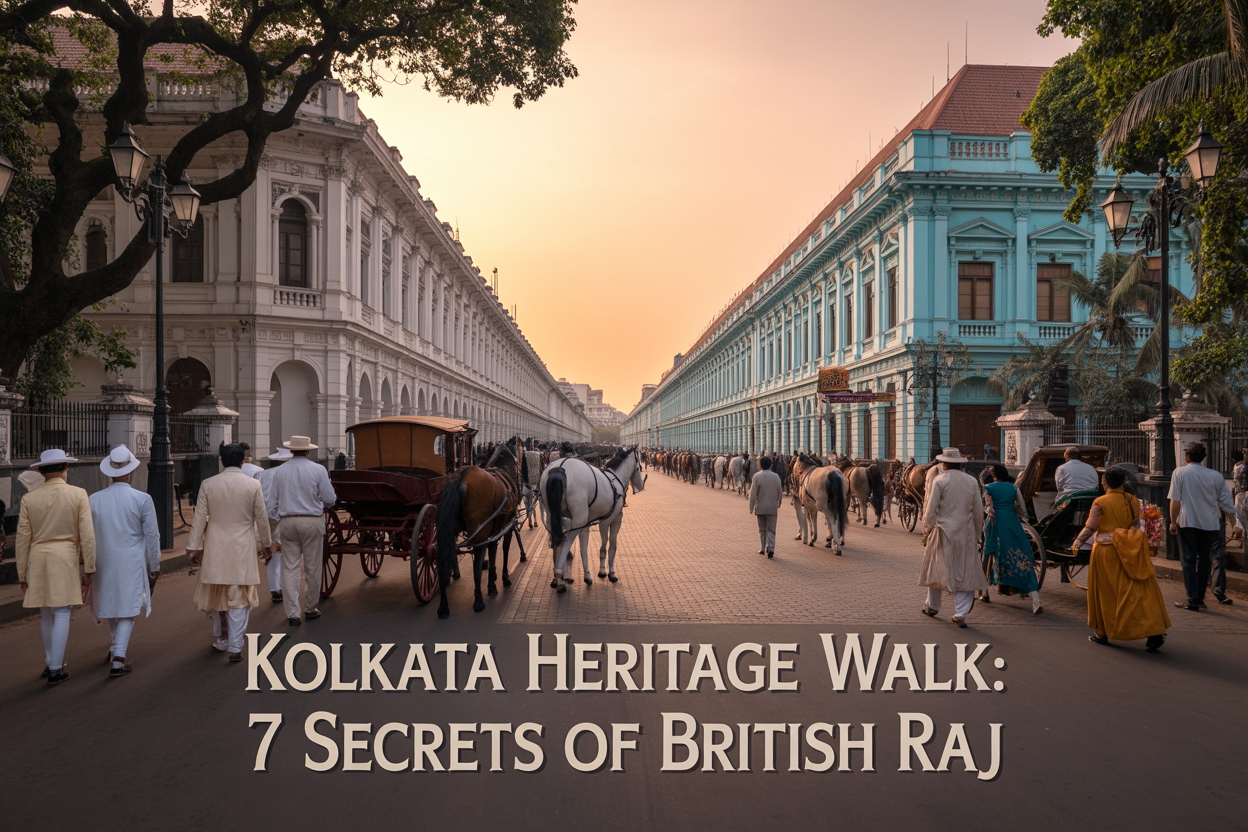
Kolkata served as the British Empire’s Indian capital for over a century, leaving behind architectural marvels and untold stories that shaped modern India. This heritage walk guide is perfect for history enthusiasts, travelers exploring Kolkata’s colonial past, and locals wanting to rediscover their city’s imperial secrets through a fresh lens.
You’ll discover how Kolkata earned its prestigious status as the “Second City of the Empire” and why the British chose this Bengal port over other Indian cities. We’ll explore the grand buildings that housed British administrative power, from Writers’ Building to Government House, revealing the architectural strategies used to project imperial authority across the subcontinent.
The walk also uncovers the hidden stories behind Kolkata’s most iconic colonial monuments and introduces you to the influential British and Bengali figures who shaped the city’s destiny. You’ll learn about the cultural fusion that created unique Anglo-Bengali traditions and trace the early seeds of India’s independence movement that first took root in these very streets.
Discover the Origins of Kolkata’s Imperial Capital Status
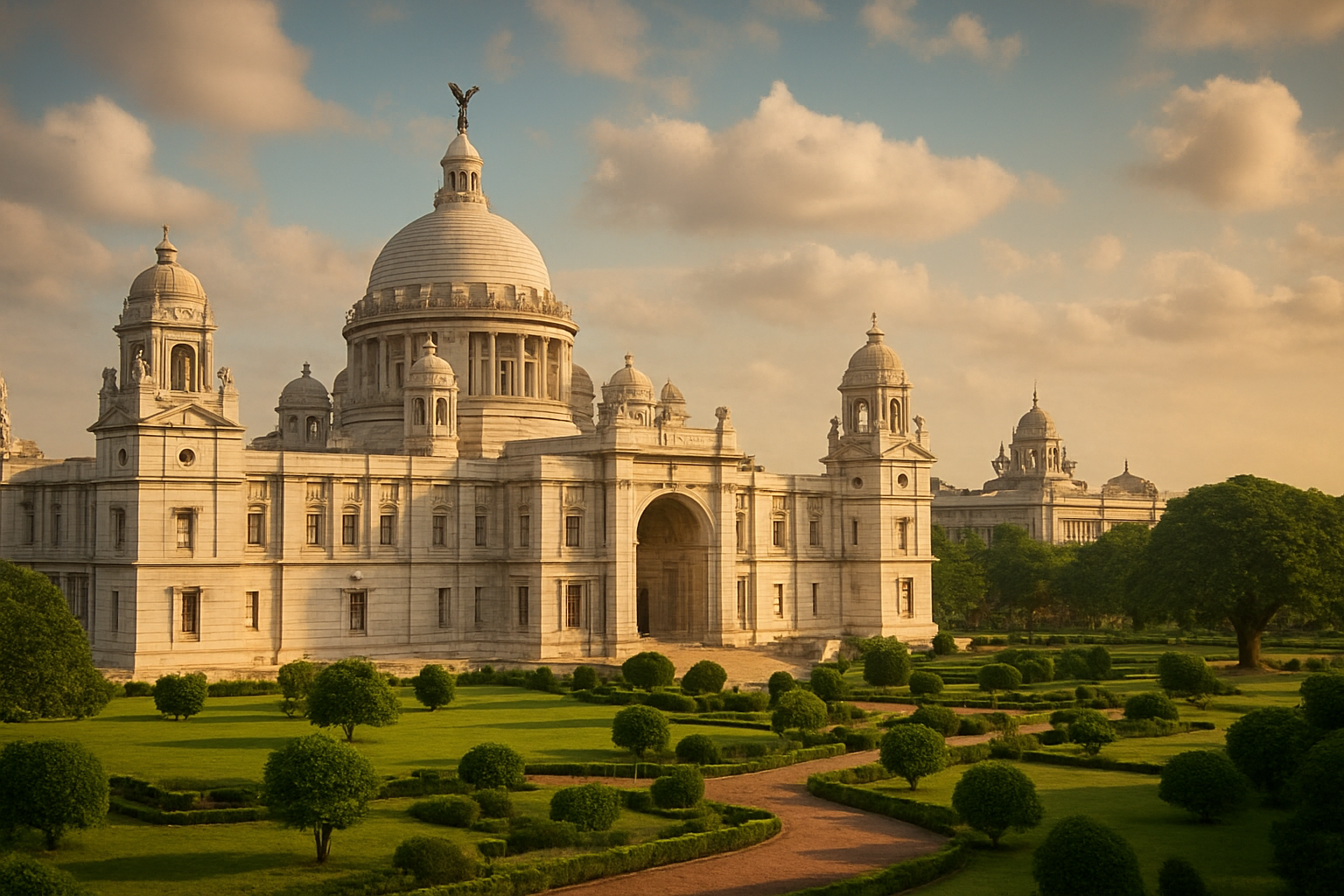
Uncover Job Charnock’s strategic settlement choices at Sutanuti
Job Charnock’s decision to establish a trading post at Sutanuti in 1690 wasn’t random—it was brilliant military and commercial strategy disguised as a simple business move. While other European traders struggled with hostile local rulers and unfavorable terms, Charnock spotted something special about this swampy stretch along the Hooghly River.
Sutanuti offered everything the East India Company desperately needed: natural protection from river pirates who plagued other settlements, direct access to Bengal’s lucrative textile trade routes, and crucially, a local zamindar willing to negotiate. The village sat perfectly positioned where the river curved, creating a natural harbor deep enough for large ships while remaining defensible from land attacks.
Charnock’s background as a seasoned Bengal trader gave him insights his competitors lacked. He understood that controlling river access meant controlling regional trade, and Sutanuti’s location allowed ships to navigate inland while avoiding the treacherous Bay of Bengal during monsoon seasons. The three villages of Sutanuti, Govindapur, and Kalikata formed a triangle of strategic advantage that would become the foundation of British commercial dominance in eastern India.
Learn how the East India Company transformed three villages into a powerhouse
The transformation began with Fort William’s construction in 1696, turning a collection of fishing villages into a fortified trading hub that would reshape subcontinental commerce. The East India Company didn’t just build structures—they created an entirely new urban ecosystem designed to extract maximum wealth from Bengal’s resources.
Within two decades, the Company had:
- Established textile weaving centers that employed thousands of local craftsmen
- Built warehouses capable of storing entire seasons’ worth of silk, cotton, and spices
- Created a banking system that financed trade across the Indian Ocean
- Developed sophisticated river transport networks reaching deep into Bengal’s interior
- Attracted Armenian, Portuguese, and Chinese merchants who brought global connections
The Company’s masterpiece was creating what economists today would call a “special economic zone.” They negotiated tax exemptions, established their own courts, and gradually assumed administrative functions that local rulers either couldn’t or wouldn’t handle. By 1715, what started as three humble villages had become the beating heart of British commerce in Asia.
The transformation accelerated after the Company’s victory at Plassey in 1757. Suddenly, they weren’t just traders operating under local sufferance—they were the de facto rulers of Bengal, with tax collection rights that generated astronomical revenues. This wealth flowed directly through Calcutta’s port, making the city indispensable to British imperial ambitions.
Explore the political maneuvers that elevated Calcutta above Madras and Bombay
Calcutta’s rise to prominence required outmaneuvering established British settlements that had decades of head start and powerful local allies. The political chess game began with the Company’s calculated decision to support different factions in Mughal succession disputes, betting on outcomes that would maximize their influence.
The breakthrough came through Robert Clive’s audacious political manipulation during the Carnatic Wars. While Madras focused on fighting the French and Bombay dealt with Maratha complications, Calcutta’s administrators cultivated relationships with Bengali nobles who controlled the region’s agricultural surplus. They offered military protection in exchange for trading privileges, gradually becoming the preferred European partner for local rulers seeking stability.
The Company played Bengal’s political fragmentation masterfully. When Siraj-ud-Daulah threatened their interests, they didn’t just fight back—they orchestrated his replacement with Mir Jafar, a leader who would grant them unprecedented commercial freedoms. This political coup gave Calcutta advantages that Madras and Bombay couldn’t match: direct control over tax collection, unrestricted river navigation rights, and authority to establish satellite trading posts throughout Bengal.
Key political victories included:
- Securing perpetual land grants that other presidencies lacked
- Negotiating duty-free trading privileges across Bengal’s textile centers
- Establishing judicial authority over European merchants company-wide
- Creating administrative precedents that other presidencies had to follow
By 1773, when the Regulating Act centralized Company governance, Calcutta’s political dominance was already established through decades of strategic relationship-building and calculated risk-taking.
Understand the geographical advantages that sealed Kolkata’s fate as the second city
Geography gave Calcutta trump cards that no amount of commercial ambition could replicate in Madras or Bombay. The Hooghly River system created a natural highway into Bengal’s agricultural heartland, allowing British merchants to tap directly into India’s most productive rice and textile regions without relying on intermediaries or overland transport.
The river’s navigability extended over 300 miles inland, connecting Calcutta to major production centers like Murshidabad, Dhaka, and Patna. This meant raw materials flowed directly to British warehouses while finished goods moved efficiently to international markets. No other British settlement enjoyed such comprehensive water transport access to agricultural surplus regions.
Bengal’s deltaic geography created additional advantages:
- Monsoon patterns that supported year-round agriculture and predictable harvest cycles
- Natural flood plains that produced exceptional textile fibers coveted in European markets
- River networks that enabled rapid communication and troop movement across the region
- Coastal positioning that offered protection from both pirates and competing European powers
The clinching geographical factor was Calcutta’s position relative to China trade routes. Ships departing Calcutta could reach Canton faster than those from western Indian ports, while return voyages brought Chinese goods directly into Bengal’s consumer markets. This created profitable triangular trade patterns that generated wealth impossible to achieve from other locations.
When the British finally moved their capital to Delhi in 1911, they weren’t abandoning Calcutta because of geographical limitations—they were responding to political pressures that geography alone couldn’t overcome.
Walk Through the Architectural Legacy of British Administrative Power
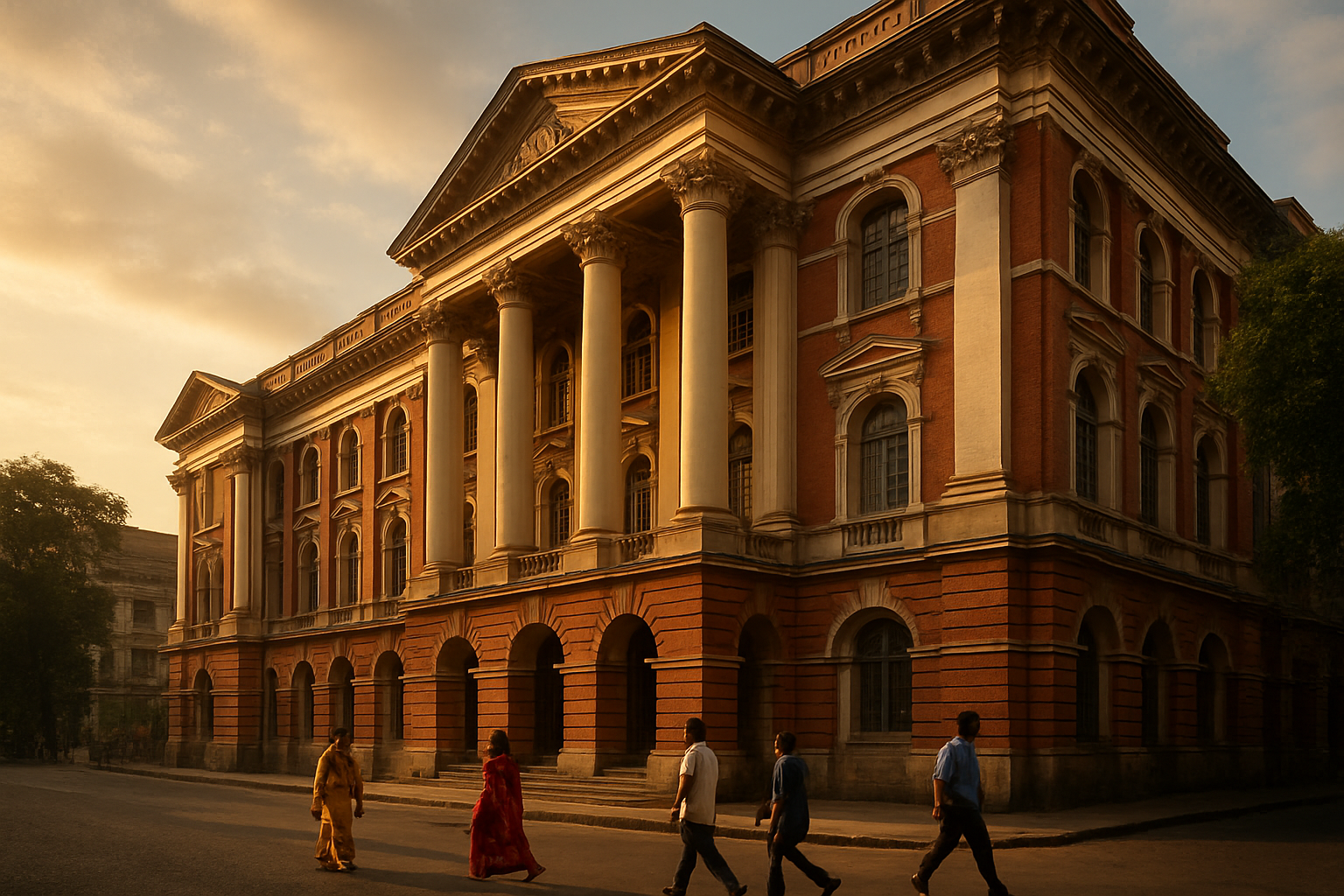
Marvel at the imposing Gothic Revival structures of Writers’ Building
The massive red-brick facade of Writers’ Building dominates Dalhousie Square like a fortress of colonial power. Built between 1777 and 1780, this imposing structure served as the nerve center of British administration in India for nearly two centuries. The Gothic Revival architecture wasn’t chosen by accident—every pointed arch, decorative spire, and ornate window was designed to project British superiority and permanence.
Walking along its 150-meter frontage, you’ll notice the building’s strategic positioning. The British deliberately constructed it to overlook the square, creating a visual hierarchy that placed colonial administrators above Indian merchants and locals who gathered below. The red sandstone exterior, imported from Rajasthan, speaks to the vast resources the Empire mobilized for its administrative headquarters.
The building’s most striking feature is its central clock tower, added in 1880. This timepiece didn’t just tell time—it synchronized colonial life across Calcutta, making British punctuality and efficiency the standard by which all other activities were measured. The intricate stonework around the clock face includes imperial symbols that proclaimed British dominance to anyone who could read architectural language.
Inside, the maze-like corridors once buzzed with clerks (called “writers”) who managed the paperwork of empire. These rooms witnessed decisions that shaped millions of lives across the subcontinent, from tax policies to trade regulations that enriched London while impoverishing Bengal.
Examine the neoclassical grandeur of Raj Bhavan’s colonial design
Raj Bhavan stands as perhaps the most refined example of colonial architecture in Kolkata, blending English grandeur with practical adaptations to Bengal’s climate. Originally built as Government House between 1799 and 1803, this neoclassical masterpiece served as the official residence of British governors-general and later viceroys of India.
The building’s designer, Captain Charles Wyatt, created a structure that rivaled the great houses of English aristocracy while accommodating tropical conditions. The massive Corinthian columns supporting the entrance portico create an immediate sense of imperial majesty, while the elevated position provides natural cooling breezes—a clever fusion of symbolism and comfort.
Walking through the approach, you’ll see how every architectural element reinforced colonial hierarchy. The sweeping circular driveway forces visitors to experience the building’s full grandeur before reaching the entrance. The symmetrical wings stretching from the central block create a sense of perfect order and control—values the British claimed to bring to what they saw as chaotic Indian society.
The building’s most remarkable feature is its Throne Room, where British royalty and governors held court. The elaborate ceiling work, crystal chandeliers, and marble floors created a European palace in the heart of Bengal. The room’s acoustics were designed to amplify the governor’s voice, ensuring his words carried appropriate authority during official ceremonies.
Decode the symbolic messaging embedded in Government House architecture
Every architectural detail of Government House (now Raj Bhavan) carries encoded messages about British imperial ideology and their relationship with India. The choice of neoclassical style wasn’t aesthetic preference—it was political strategy. By adopting the architectural language of ancient Greece and Rome, the British positioned themselves as inheritors of classical civilization, implying that Indian traditions were primitive by comparison.
The building’s elevated platform, reached by a grand staircase, literally and symbolically placed British authority above ground level where Indians conducted daily life. Visitors ascending these steps experienced a physical journey from Indian street level to British imperial heights. The lions flanking the entrance—symbols of British royal power—served as guardians that reminded everyone of the Empire’s ultimate authority.
The extensive use of European marble and imported materials sent a clear economic message. While Bengali artisans possessed extraordinary skills in working with local materials, the British insisted on expensive imports to demonstrate their global reach and financial superiority. Local craftsmen could admire the workmanship but couldn’t replicate the materials without imperial resources.
The building’s orientation also carries meaning. The main facade faces north toward the Hooghly River, the commercial lifeline that connected Calcutta to London. This positioning created a visual axis linking the seat of political power with the source of economic wealth, reminding viewers that British rule rested on controlling both governance and trade.
The landscaped gardens surrounding Government House represented another layer of symbolic colonization—British gardening principles imposed on Bengali soil, creating orderly English-style grounds where tropical abundance once flourished.
Unearth the Hidden Stories Behind Kolkata’s Most Famous Colonial Monuments
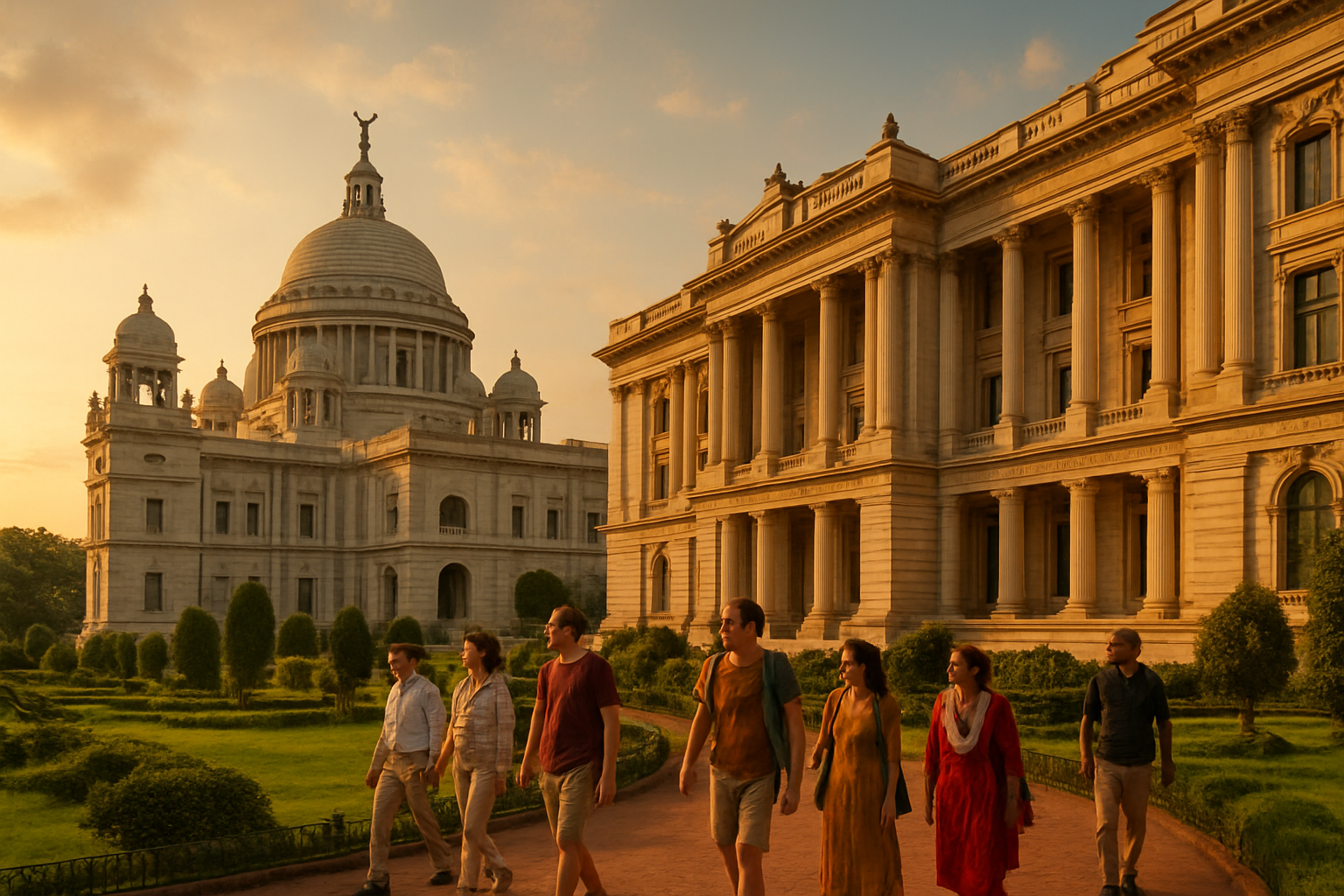
Reveal the controversial history behind Victoria Memorial’s construction
The gleaming white marble monument that dominates Kolkata’s skyline carries a darker story than most visitors realize. When Lord Curzon conceived the Victoria Memorial in 1901, the project sparked fierce debate among British officials who questioned spending massive funds on a monument while millions of Indians faced poverty and famine.
The memorial’s construction between 1906-1921 relied heavily on forced labor and exploitative practices. Indian craftsmen worked under harsh conditions for minimal wages, while precious white Makrana marble was extracted using methods that devastated local communities. The British justified these practices as “necessary sacrifices for imperial glory.”
What’s particularly striking is how the memorial’s design deliberately emphasized British supremacy. The building sits elevated on a platform, literally looking down upon the city, while the surrounding gardens were designed to keep common Indians at a distance. The bronze statues and reliefs inside tell a completely one-sided version of British colonial achievements, omitting any mention of famines, uprisings, or exploitation.
Local Bengali intellectuals of the time called it “a monument to oppression disguised as tribute,” and many prominent Indian leaders boycotted the opening ceremony. Today, the memorial ironically serves as a museum documenting the very colonial period it was built to glorify.
Discover the secrets of Fort William’s strategic military importance
Fort William wasn’t just another colonial fortress – it was the nerve center of British military control over the entire subcontinent. Built after the infamous Black Hole of Calcutta incident in 1756, the fort represented Britain’s determination to never again lose control of their most profitable colony.
The fort’s octagonal design incorporated cutting-edge 18th-century military architecture, with each bastion named after prominent British figures. But here’s what most people don’t know: the fort was built using a sophisticated intelligence network that extended across Bengal. The British employed local spies and informants to monitor potential threats, creating one of history’s earliest examples of systematic colonial surveillance.
The fort’s underground tunnels and secret passages remain largely unexplored today. These passages connected to various points across the city, allowing British officials to move unseen during times of unrest. Some tunnels allegedly extended all the way to the Hooghly River, providing escape routes during emergencies.
During World War II, Fort William served as the headquarters for the Eastern Command, coordinating military operations across Southeast Asia. The fort housed advanced communication equipment that connected Calcutta to London, making it a crucial link in Britain’s global military network. The massive Martello Tower, visible from miles away, served as both a watchtower and a symbol of British military might that could be seen throughout the city.
Learn about the Eden Gardens’ transformation from private estate to public space
Originally, Eden Gardens existed as the private pleasure grounds of Lord Auckland’s family estate in the 1840s. The Auckland family, particularly Eden Auckland’s sisters Emily and Fanny Eden, created an elaborate English garden complete with rare plants imported from Britain and carefully maintained lawns that required constant irrigation – a luxury in Bengal’s climate.
The transformation began when the government acquired the property in 1841, but the real story lies in why they needed the space. The British were facing increasing social pressure from the growing Bengali middle class who demanded access to recreational facilities. The colonial administration realized that providing public spaces might help reduce political tensions while maintaining control over how Indians spent their leisure time.
The gardens became a carefully orchestrated social experiment. The British designed walking paths, seating arrangements, and activity areas to subtly enforce racial segregation while appearing to offer equal access. Certain sections remained exclusively for European families, while others were designated for “natives” during specific hours.
What makes this particularly fascinating is how Bengali society subverted these intentions. Local families began using the gardens for political discussions, cultural gatherings, and social meetings that the British couldn’t easily monitor. The famous Burmese Pagoda, gifted in 1856, became an unofficial meeting spot for independence activists who used religious gatherings as cover for political organizing.
Explore the lesser-known tales of St. Paul’s Cathedral’s foundation
St. Paul’s Cathedral stands as Kolkata’s Anglican masterpiece, but its foundation story reveals the complex religious politics of colonial India. When Bishop Daniel Wilson arrived in Calcutta in 1832, he was shocked to discover that the existing churches were inadequate for the growing European population and, more importantly, failed to project the religious authority that Britain wanted to establish.
The cathedral’s construction faced unexpected challenges that nearly derailed the project. The marshy Bengal soil couldn’t support the massive Gothic structure initially planned, forcing architects to completely redesign the foundation using innovative techniques borrowed from Dutch engineers who had experience building in similar conditions.
Local resistance came from an unexpected source – Calcutta’s Armenian Christian community, who had established churches in the city long before the British arrived. They viewed the new cathedral as an attempt to diminish their religious influence and initially refused to sell land needed for the project. The British eventually overcame this opposition through a combination of financial incentives and political pressure.
The cathedral’s famous stained glass windows hide a remarkable story of cultural exchange. While designed by British artists, they were actually crafted by local Bengali artisans who had mastered European techniques while adding subtle Indian elements that most visitors never notice. The intricate stonework similarly represents a fusion of British Gothic revival style with traditional Bengali craftsmanship techniques, creating a unique architectural hybrid that reflects the complex cultural dynamics of colonial Calcutta.
Experience the Commercial Empire That Built British Wealth
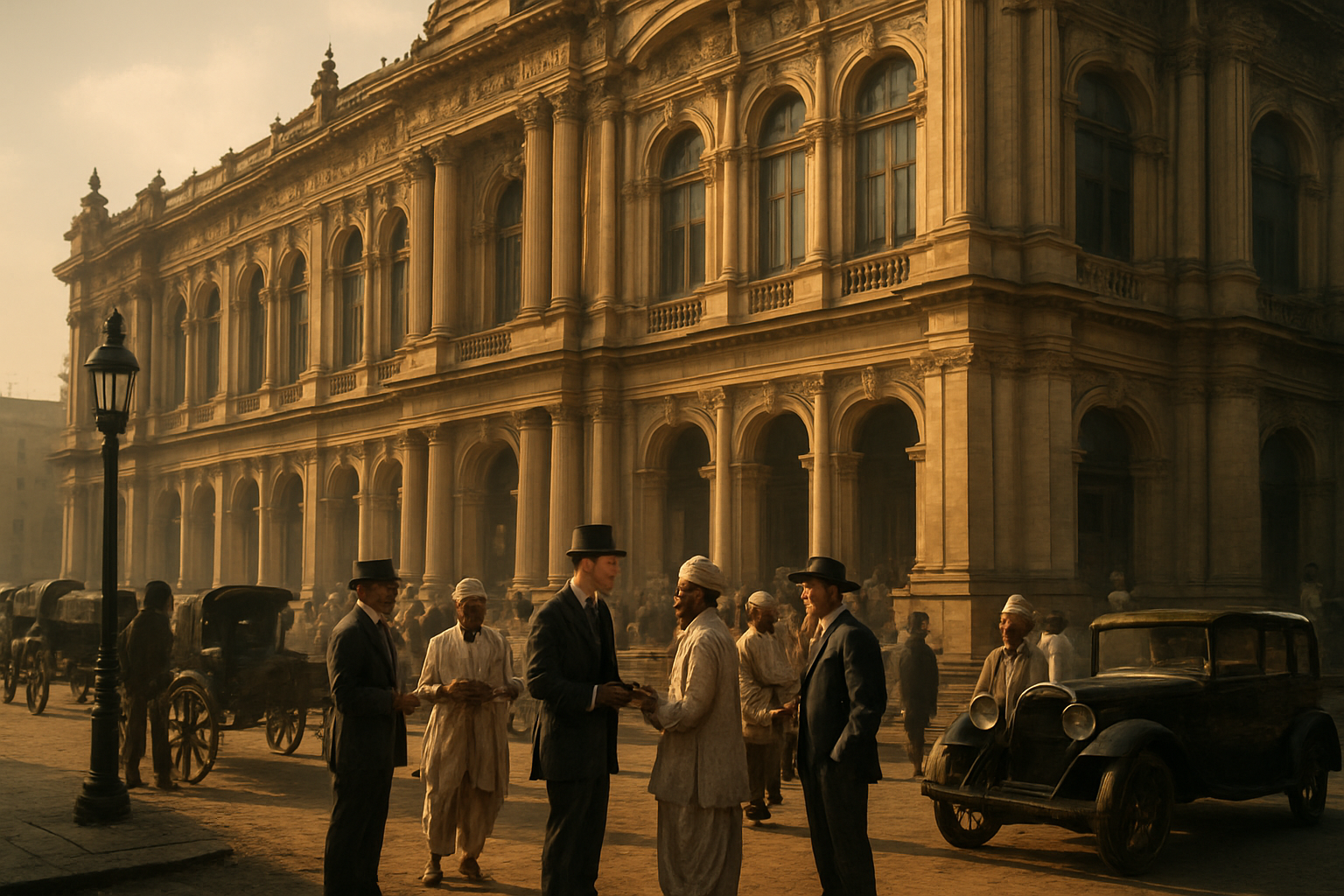
Trace the opium trade routes that originated from Kolkata’s docks
The Hooghly River carried more than water through Kolkata’s bustling port – it transported one of history’s most controversial commodities. Opium warehouses lined the riverbanks, storing tons of the drug harvested from Bihar and Bengal’s poppy fields. These imposing brick structures, many still standing today, processed nearly 4,000 chests of opium annually by the 1830s.
Walking along Strand Road, you can spot the remnants of these trading houses where British merchants orchestrated a triangular trade network. Ships departed Kolkata loaded with opium, sailed to Canton (modern-day Guangzhou), exchanged the cargo for Chinese tea and silk, then returned to London. This cycle generated astronomical profits – a single chest of opium could sell for 1,200 silver dollars in China.
The East India Company’s opium monopoly transformed sleepy riverside villages into commercial powerhouses. Patna became a processing hub, while Kolkata’s Clive Street housed the offices where auction prices were set. British officials meticulously recorded every transaction, creating detailed ledgers that survive in colonial archives.
Local Bengali merchants also participated, though they faced strict regulations. The Company controlled every aspect from cultivation licenses to shipping manifests, ensuring maximum revenue extraction from this “peculiar trade.”
Understand how jute mills created unprecedented colonial prosperity
Dundee’s textile mills might have earned the nickname “Juteopolis,” but Kolkata was where the golden fiber’s empire truly began. The swampy regions surrounding the city provided perfect growing conditions for jute, while the Hooghly River offered transportation and water power for processing mills.
By 1895, seventy-seven jute mills operated along both sides of the river, stretching from Budge Budge to Naihati. These industrial complexes employed over 200,000 workers and produced 80% of the world’s jute products. Walking through areas like Rishra and Titagarh today, you can still see the red-brick mill buildings with their distinctive tall chimneys.
The profits were staggering. Raw jute cost roughly 3 rupees per maund (about 82 pounds), but finished gunny bags sold for 12-15 rupees. British mill owners like the Birla and Jardine families built palatial mansions in Ballygunge and Alipore with these earnings.
Scottish engineers and managers ran the mills while Bengali workers operated the machinery. This created a unique industrial culture where Highland bagpipes played during shift changes, and workers celebrated both Durga Puja and Christmas. The mills funded entire neighborhoods, building schools, hospitals, and housing colonies that shaped Kolkata’s modern layout.
Discover the banking networks that financed the entire British Empire
Dalhousie Square (now BBD Bagh) wasn’t just Kolkata’s administrative heart – it was the financial nerve center of the British Empire. The imposing facades of Exchange Buildings and Writers’ Building housed banking houses that moved millions of pounds across three continents daily.
Palmer & Company, established in 1773, pioneered the agency house system that dominated colonial finance. These institutions combined banking, trading, and insurance under one roof, creating financial instruments that funded everything from tea plantations in Assam to railway construction in Punjab. When Palmer collapsed in 1830, it triggered the first major financial crisis in colonial India.
The Calcutta Stock Exchange, founded in 1908, traded shares in companies spanning from Burmese rice mills to Malayan rubber estates. Local Marwari merchants like the Poddars and Goenkas gradually entered these networks, creating hybrid financial systems that blended British banking practices with traditional Indian hawala networks.
Banks like the Imperial Bank of India (now State Bank of India) issued currency notes that circulated from Kabul to Singapore. Their gold reserves, stored in underground vaults beneath BBD Bagh, backed trade transactions worth millions of rupees. Walking through the narrow lanes around Old Court House Street, you can still spot the modest offices where money-changers facilitated international commerce using handwritten ledgers and verbal agreements.
Learn about the textile trade connections between Kolkata and Manchester
Cotton wasn’t just a crop – it was the thread that wove Kolkata into Manchester’s industrial revolution. Raw cotton bales stacked twenty feet high filled Kolkata’s warehouse districts, waiting for ships that would carry them 6,000 miles to Lancashire’s spinning mills.
The irony was profound: Bengal’s handloom weavers, once renowned for producing the world’s finest muslins, watched their own cotton sail away only to return as machine-made cloth that undercut local prices. Manchester’s steam-powered mills could produce cotton goods at a fraction of traditional costs, flooding Indian markets with cheap textiles.
British trading houses like Jardine Matheson established buying networks that reached deep into cotton-growing regions. Their agents traveled to places like Nagpur and Berar, advancing money to farmers and securing entire harvests before planting season ended. These forward contracts guaranteed steady supply chains while keeping cotton prices artificially low.
The reverse flow was equally significant. Finished textiles from Manchester arrived at Kolkata’s docks and spread throughout the subcontinent via the railway network. Local merchants adapted by becoming distributors rather than producers, fundamentally altering Bengal’s economic structure. Some Bengali entrepreneurs like Dwarkanath Tagore invested directly in British mills, creating transnational business partnerships that spanned two continents.
Explore the role of tea auctions in establishing global commerce
Every Tuesday morning, the sound of auctioneers’ gavels echoed through Kolkata’s tea auction halls, setting prices that would reach London breakfast tables within weeks. The Calcutta Tea Auction, established in 1861, became the world’s largest tea trading center, handling over 200 million pounds annually by the early 1900s.
Sample rooms lined the auction houses where buyers examined thousands of tea lots using specialized tasting techniques. Professional tea tasters could distinguish between Darjeeling’s muscatel notes and Assam’s robust malty flavors with remarkable precision. These experts commanded high salaries and shaped global tea preferences through their expert classifications.
The auction system connected remote Himalayan gardens with international markets through sophisticated logistics networks. Tea chests traveled from mountain plantations to Kolkata by rail, then shipped to London, New York, and St. Petersburg. Prices fluctuated based on seasonal quality, weather reports from tea districts, and global demand patterns tracked through telegraphic communications.
Local Bengali brokers gradually entered this trade, learning European commercial practices while maintaining connections with traditional business networks. Firms like Williamson Magor and Goodricke established dynasties that dominated tea commerce for generations. The wealth generated funded lavish tea garden bungalows and ornate Kolkata mansions, creating a distinctive planter culture that blended Scottish thrift with Bengali hospitality.
Meet the Influential Figures Who Shaped Colonial Kolkata
Warren Hastings’ Administrative Reforms and Their Lasting Impact
Warren Hastings arrived in Bengal in 1750 as a young clerk, but his rise to become the first Governor-General of India transformed Kolkata into the administrative heart of British India. His reforms between 1772-1785 created the blueprint for colonial governance that lasted well into the 20th century.
The man behind the East India Company’s transformation from trading entity to ruling power established the Supreme Court of Calcutta in 1774, which still operates today as the Calcutta High Court. Walking through the colonial district, you’ll see how Hastings systematized revenue collection through his Permanent Settlement, creating a class of wealthy Bengali landlords who became intermediaries between British rulers and Indian peasants.
His most controversial yet effective reform was the introduction of English legal procedures alongside traditional Indian law. This dual system shaped Kolkata’s unique legal culture, where barristers trained in London worked alongside local legal scholars. The beautiful colonial courthouse buildings you see today reflect this fusion – their architecture combines British judicial traditions with local craftsmanship.
Hastings also established the Asiatic Society of Bengal in 1784, which became Asia’s first center for oriental studies. This institution, housed in Park Street, encouraged British officials to study Indian languages, history, and culture, creating a generation of scholar-administrators who deeply influenced Indo-British relations.
Lord Curzon’s Urban Planning Vision for Imperial Calcutta
Lord Curzon’s tenure as Viceroy from 1899-1905 reshaped Kolkata’s physical landscape more dramatically than any other colonial administrator. His grand vision transformed the chaotic trading port into a majestic imperial capital that could rival London or Paris.
The Victoria Memorial, Curzon’s crowning achievement, wasn’t just a monument but the centerpiece of his urban planning philosophy. He believed impressive architecture would demonstrate British permanence and superiority to Indians while inspiring loyalty among colonial subjects. The memorial’s pristine white marble dome, visible from miles away, served as a psychological anchor for imperial authority.
Curzon’s street-widening projects created the broad avenues you walk today – Chowringhee Road, Red Road, and the Maidan. These weren’t random improvements but calculated urban design meant to facilitate military movement while creating impressive vistas of British buildings. The wide spaces prevented the kind of narrow-street riots that had troubled earlier administrators.
His restoration of historical monuments like Fort William demonstrated his belief that preserving the past enhanced British legitimacy. Curzon established the Archaeological Survey of India, whose Kolkata headquarters still maintains thousands of historical sites across the subcontinent.
The segregated cantonment areas Curzon expanded created clear physical boundaries between British and Indian neighborhoods. Walking through these areas today, you can still see how his planning reinforced social hierarchies through geography – European quarters featured wide roads, gardens, and modern amenities while Indian areas remained densely packed with narrow lanes.
The Role of Bengali Intellectuals in Colonial Administration
Bengali intellectuals didn’t just serve the British Raj – they helped create it. The relationship between colonial administrators and local scholars was far more complex and collaborative than popular history suggests, creating a unique intellectual fusion that defined Kolkata’s character.
Raja Ram Mohan Roy, often called the “Father of Modern India,” worked closely with British officials to reform Hindu society while maintaining cultural authenticity. His collaboration with Governor-General William Bentinck led to the abolition of sati and the establishment of Hindu College (now Presidency University). Walking past the college today, you’ll see how this partnership created India’s first modern educational institution.
The Fort William College, established in 1800, trained British civil servants in Indian languages and customs while employing Bengali scholars as teachers and translators. These intellectuals, including Mrityunjay Vidyalankar and Ramram Basu, created the first modern Bengali prose and standardized the language. Their work directly influenced how British policies were communicated to Indian subjects.
Bengali legal scholars like Jagannath Tarkapanchanan served as advisors to British judges, helping create the hybrid legal system that combined English common law with Hindu and Islamic jurisprudence. Their interpretations of traditional law became the foundation for colonial legal codes used across India.
The emergence of the Bengali bhadralok (gentleman) class created a buffer between British rulers and the general population. These English-educated professionals – lawyers, doctors, teachers, and clerks – staffed the lower levels of colonial administration while maintaining their Indian identity. Their comfortable homes in areas like Shyambazar and Hatibagan reflect their unique position as cultural bridges.
This intellectual collaboration wasn’t one-sided exploitation. Bengali scholars gained access to Western knowledge while British administrators learned to navigate complex Indian social structures, creating the sophisticated administrative system that managed a subcontinent of 300 million people with remarkably few British personnel.
Explore the Cultural Fusion That Defined Anglo-Bengali Society
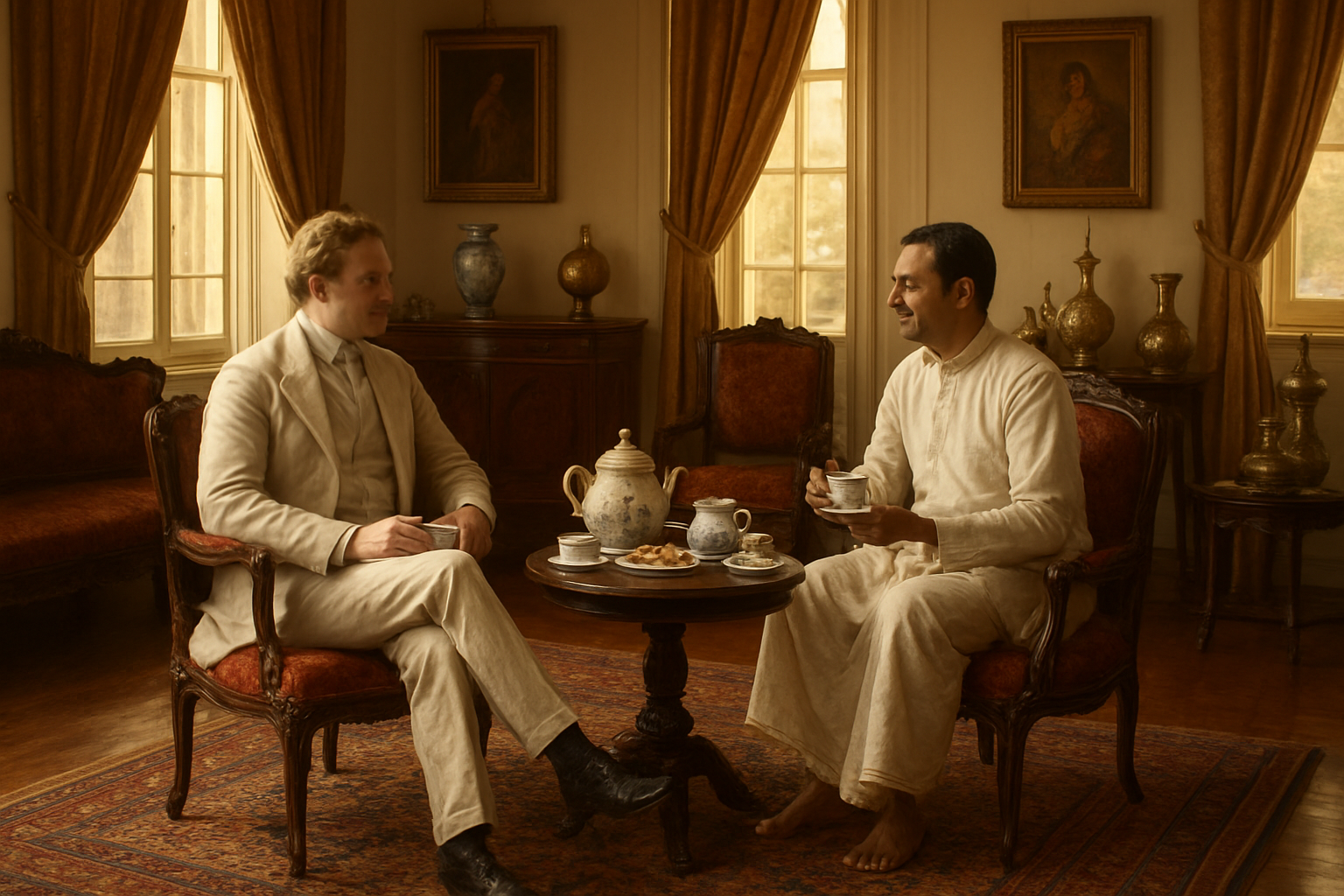
Witness how European education transformed Bengali intellectual life
European education systems arrived in Kolkata like a cultural earthquake, completely reshaping how Bengali intellectuals thought about the world. The establishment of institutions like Hindu College in 1817 and Presidency College created an entirely new class of Bengali thinkers who could navigate both Eastern philosophy and Western scientific reasoning with equal skill.
Young Bengalis suddenly found themselves reading Shakespeare alongside Sanskrit texts, studying Newtonian physics while practicing ancient meditation techniques. This wasn’t just about learning English – it was about developing a completely different way of processing knowledge. Ram Mohan Roy, often called the father of modern India, perfectly embodied this transformation, seamlessly blending Western rational thought with Hindu reformist ideas.
The printing press became the weapon of choice for this new intellectual class. Bengali newspapers, journals, and books exploded across the city, creating public debates that had never existed before. Women’s education, social reform, and religious questioning became hot topics in coffee houses and drawing rooms across Kolkata.
Discover the emergence of the Bengali Renaissance through colonial influence
The Bengali Renaissance wasn’t born in isolation – it was the direct result of this incredible cultural collision between East and West. Think of it as Kolkata’s intellectual big bang moment, where centuries-old traditions met cutting-edge European ideas and created something entirely new.
Writers like Bankim Chandra Chattopadhyay started crafting novels that combined Western storytelling techniques with deeply Bengali themes. Rabindranath Tagore took this fusion even further, creating poetry and music that spoke to universal human experiences while remaining distinctly Bengali in spirit.
The renaissance touched everything – art, literature, theater, music, and social reform. Bengali intellectuals didn’t just copy European models; they created hybrid forms that were uniquely their own. The famous Calcutta School of painting emerged from this period, blending European academic techniques with Indian subjects and sensibilities.
Social reformers used Western concepts of individual rights and scientific thinking to challenge age-old practices like sati and child marriage. They weren’t rejecting their culture – they were reimagining it through new lenses.
Learn about the social clubs that bridged British and Bengali elite circles
Kolkata’s social clubs became the fascinating middle ground where British officials and wealthy Bengali families mingled, creating an entirely new social ecosystem. The Calcutta Club, established in 1907, stands as perhaps the most famous example of these cultural meeting points, though earlier informal gatherings laid the groundwork for these interactions.
These weren’t just places to play cards and drink tea. They became laboratories for cultural exchange where British administrators learned about local customs while Bengali elites absorbed European social practices. The conversations happening in these drawing rooms shaped policy decisions and business partnerships that affected millions of lives.
The Bengal Club and Saturday Club created spaces where interracial marriages were discussed, where Bengali intellectuals could present their ideas to British audiences, and where British officers could gain deeper understanding of the communities they governed. These relationships weren’t always equal – power dynamics definitely favored the British – but they created genuine friendships and partnerships that influenced both communities.
Women played crucial roles in these social networks too. British wives hosted salons where Bengali women could practice English, while Bengali hostesses introduced British families to Indian festivals and traditions.
Understand the evolution of Indo-European architectural styles
Walking through Kolkata today, you’re basically experiencing a masterclass in architectural fusion. The city became a testing ground where British architects experimented with combining European styles with Indian climate needs and local materials, creating something that belonged fully to neither tradition yet somehow worked perfectly for both.
The Victoria Memorial stands as the crown jewel of this architectural conversation – a building that’s unmistakably British in its grandeur yet incorporates Mughal domes and Indo-Saracenic details that make it uniquely South Asian. But the real innovation happened in residential areas, where Bengali families started building homes that mixed Georgian facades with traditional courtyards and verandas.
Local craftsmen became the unsung heroes of this architectural evolution. They took European blueprints and adapted them using techniques passed down through generations, creating buildings that could handle monsoon rains while satisfying British tastes for symmetry and classical proportions.
The result was neighborhoods where Greek columns supported Bengali tile roofs, where English gardens surrounded traditional tank ponds, and where European ballrooms opened onto Indian courtyards. This wasn’t architectural confusion – it was creative problem-solving that produced some of the most beautiful buildings in Asia.
Uncover the Seeds of Independence Movement in Colonial Calcutta
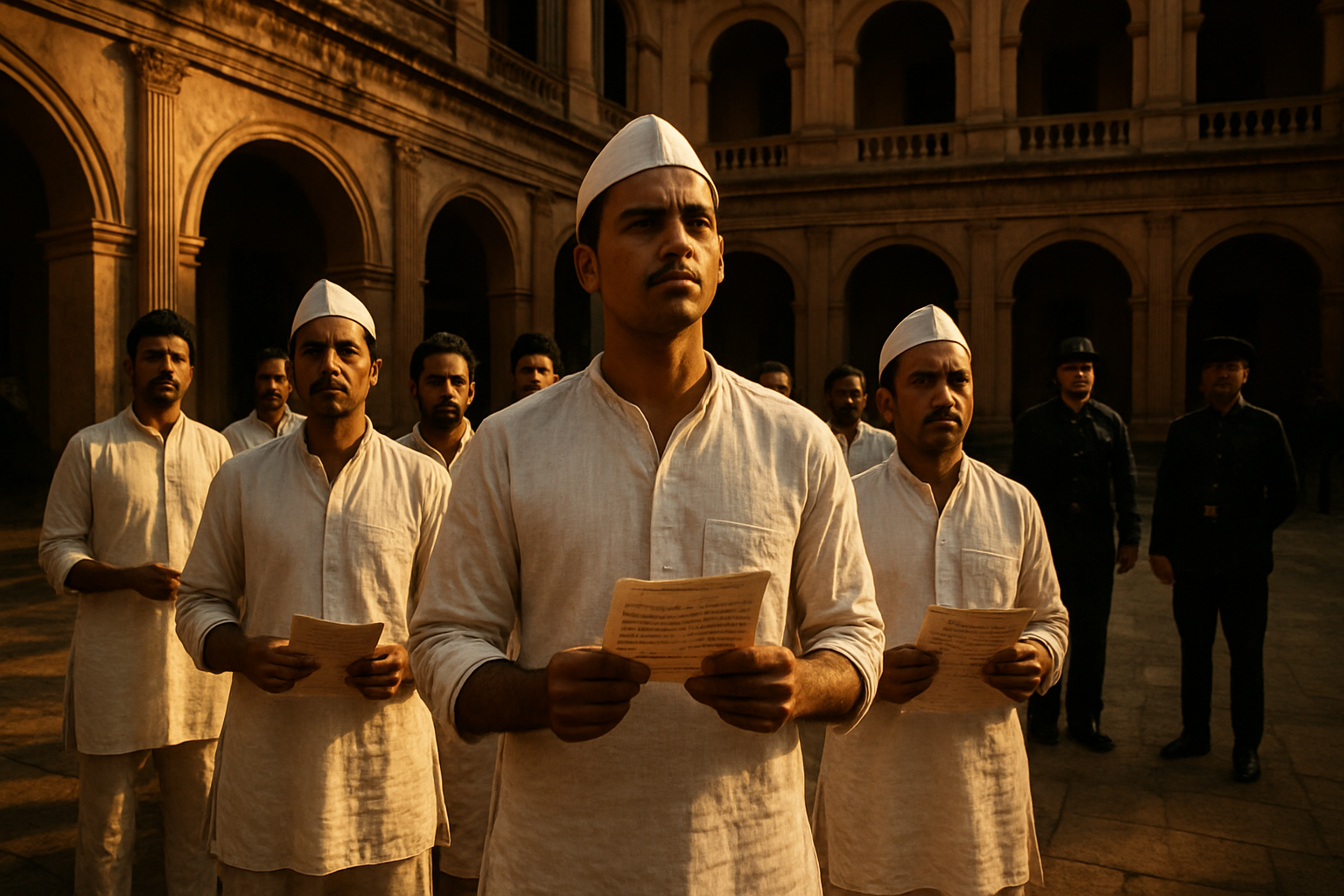
Trace the early nationalist activities in College Street and beyond
College Street pulses with revolutionary energy even today, but during the early 1900s, it was the beating heart of India’s independence movement. The famous Presidency College became a breeding ground for nationalist thought, where young minds gathered to discuss freedom and challenge British authority. Students would huddle in the college corridors and nearby coffee houses, planning protests and distributing banned literature that criticized colonial rule.
The Coffee House on College Street served as an unofficial headquarters for revolutionary discussions. Writers, students, and freedom fighters would spend hours debating politics over steaming cups of tea. Many of the ideas that would later shape India’s independence movement were born in these heated conversations.
Bengali intellectuals transformed the neighborhood into an intellectual battleground against British policies. The area around Sanskrit College witnessed regular meetings where prominent leaders like Surendranath Banerjea would address passionate crowds about self-governance and civil rights.
Book publishers along College Street played a crucial role by printing nationalist literature, often at great personal risk. They published pamphlets, newspapers, and books that exposed British exploitation and promoted Indian culture and values.
Discover how the 1905 Partition of Bengal sparked revolutionary fervor
The Partition of Bengal in 1905 hit Kolkata like a thunderbolt, dividing the province along religious lines and triggering unprecedented resistance. Lord Curzon’s decision to split Bengal was seen as a deliberate attempt to weaken Bengali unity and crush the growing nationalist movement.
The announcement sparked massive protests across Kolkata’s streets. Crowds gathered at the Calcutta Town Hall and marched through central areas, burning British goods and boycotting foreign cloth. The famous “Swadeshi movement” gained momentum, with people pledging to use only Indian-made products.
Revolutionary groups emerged from this anger, with young Bengalis forming secret organizations dedicated to violent resistance against British rule. The Anushilan Samiti and Jugantar became household names, organizing bomb attacks and assassinations of British officials.
Women joined the movement in unprecedented numbers, participating in protest marches and organizing boycotts of British goods. They would go door-to-door in neighborhoods like Shyambazar and Kumartuli, convincing families to join the resistance.
The partition transformed ordinary citizens into revolutionaries. Shopkeepers refused to sell British goods, students boycotted government schools, and even government employees resigned from their positions in protest.
Learn about the secret societies that operated from Kolkata’s neighborhoods
Hidden beneath Kolkata’s bustling streets, secret revolutionary societies operated sophisticated networks that would make modern spy agencies envious. The Anushilan Samiti established numerous safe houses across neighborhoods like Maniktala, Bagbazar, and Shyambazar, where young revolutionaries learned bomb-making and weapons training.
The famous Maniktala bomb conspiracy involved a secret laboratory where revolutionaries manufactured explosives in an ordinary suburban house. Neighbors had no idea that their quiet street housed one of the most significant revolutionary operations in Indian history.
Jugantar, another prominent secret society, operated from multiple locations across the city. They used code names, secret signals, and elaborate communication systems to coordinate their activities. Members would meet in temples, private homes, and even in the back rooms of seemingly innocent shops.
The societies recruited from colleges, particularly targeting students who showed anti-British sentiments. They created elaborate initiation ceremonies and oath-taking rituals that bound members to absolute secrecy. Young men would disappear into these underground networks, emerging as trained revolutionaries ready to sacrifice their lives for independence.
Safe houses in areas like Cossipore and Baranagar served as printing presses for revolutionary literature. These locations published banned newspapers and pamphlets that exposed British atrocities and called for armed resistance.
Understand the role of student activism in anti-colonial resistance
Student activism in colonial Kolkata was nothing short of extraordinary, with young people leading some of the most daring acts of resistance against British rule. Presidency College, Scottish Church College, and other educational institutions became hotbeds of revolutionary activity where students organized strikes, protests, and underground movements.
The student community created their own newspapers and magazines that criticized British policies and promoted nationalist ideas. They would distribute these publications secretly across college campuses, often facing expulsion or arrest if caught.
Student-led boycotts of British goods became a powerful weapon against colonial economics. College students would patrol markets, persuading shopkeepers not to sell foreign cloth and encouraging people to buy Indian-made products. They organized public burnings of foreign goods in college courtyards and public spaces.
Many students joined secret revolutionary organizations while still pursuing their studies. They would attend classes during the day and participate in bomb-making workshops or weapons training at night. Some of the most famous revolutionaries, including Khudiram Bose and Prafulla Chaki, were barely out of their teens when they carried out daring attacks against British officials.
The Bengal partition protests saw massive student participation, with entire colleges going on strike for weeks. Students would march through the streets carrying the tricolor flag and singing patriotic songs, inspiring ordinary citizens to join the resistance movement.
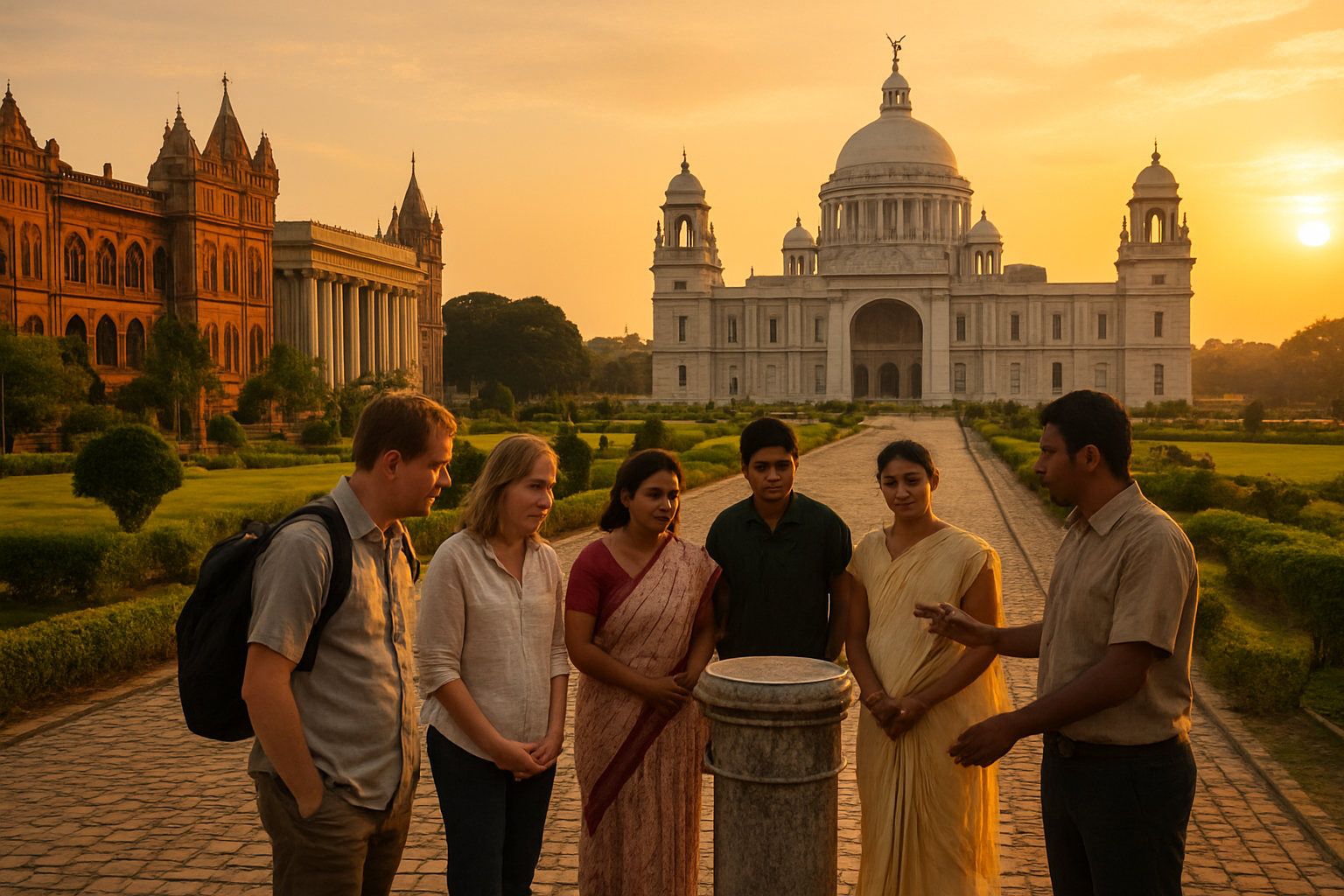
Kolkata’s streets hold centuries of stories that shaped both India and the British Empire. From the grand administrative buildings that once commanded an empire to the bustling commercial districts that funded British wealth, every corner reveals how this city became the jewel of colonial India. The monuments aren’t just stone and mortar – they’re witnesses to the rise of influential figures, the birth of cultural fusion, and the quiet stirrings of a independence movement that would eventually change the world.
Walking through these historic lanes connects you directly to the people and events that defined an era. The architectural marvels, hidden stories, and cultural exchanges you’ll discover paint a complete picture of how Kolkata earned its title as the Empire’s second city. Book a heritage walk today and step into the fascinating world where British ambition met Bengali resilience, creating a unique chapter in world history that still echoes through the city’s vibrant streets.
Leave a Reply