

The Midnight Rider of the Coromandel
Imagine it is a humid, salt-thick night in July 1639. The moon hangs low over the Bay of Bengal, illuminating a desolate, swampy strip of sand that the world will one day know as Chennai. This is the real story being revealed in the Georgetown Walk, Chennai!
A lone rider gallops south along the shoreline. His name is Francis Day. He is an ambitious, perhaps slightly reckless, agent of the East India Company. Officially, he is on a mission of grave imperial importance: to find a “strategic foothold” for a struggling British trade mission. But as his horse’s hooves kick up the wet sand of what is now the Marina, he isn’t thinking about calico cloth or saltpeter.
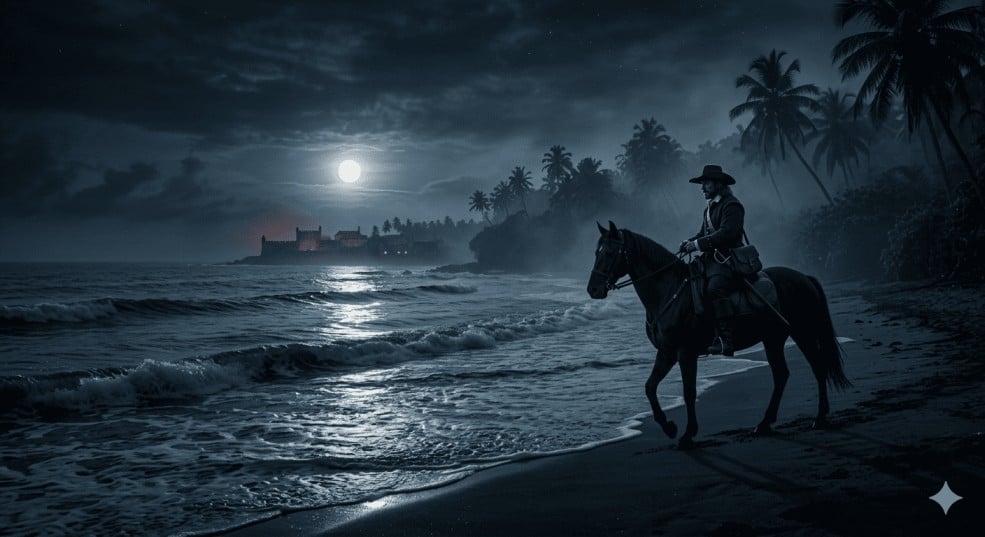
He is thinking about a woman.
According to local legend—a story whispered in the narrow lanes of Mylapore for four centuries—the British Empire didn’t choose Madras because of its harbor. In fact, Madras had no harbor; the surf was so treacherous it smashed wooden ships to pieces. No, the British chose this exact spot because Francis Day had fallen hopelessly in love with a Portuguese-Indian lady living in the settlement of San Thome. To be near her, he needed a base close by. This “romantic inconvenience” is exactly how the global powerhouse of Madras was born. If you want to feel the pulse of this story, you have to join a Georgetown Walk Chennai and stand where the sand meets the stone.
Part I: The “Useless” Patch of Sand and the Founding of Madras
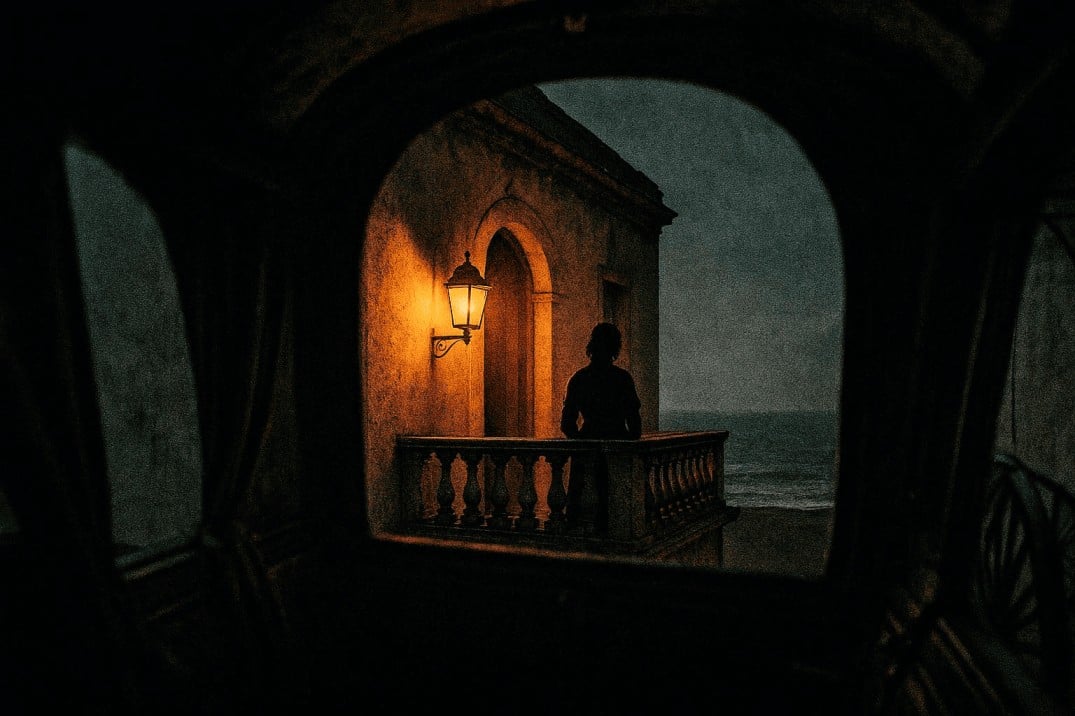
In the early 1600s, the East India Company was losing. They were the underdogs of the Indian Ocean. The British were cramped in a miserable, mosquito-infested outpost called Armagon. It was a failure of epic proportions. Francis Day was sent to find a “New Hope.” He sailed down the coast and, on August 22, 1639, he signed a deed for a tiny fishing hamlet called Madraspatnam.
When the news reached his superiors, they were horrified. “There is no port! The land is a swamp!” they cried. The founding of Madras seemed like a suicide mission. But Day was insistent. He touted the quality of the local weavers, but the local gossip told a different truth: San Thome was just three miles south. From Madraspatnam, a man in love could be at his mistress’s door in thirty minutes. This human element of Fort St. George history is the very soul of the city.
Part II: The Calico Craze – The Threads of the Georgetown Walk Chennai
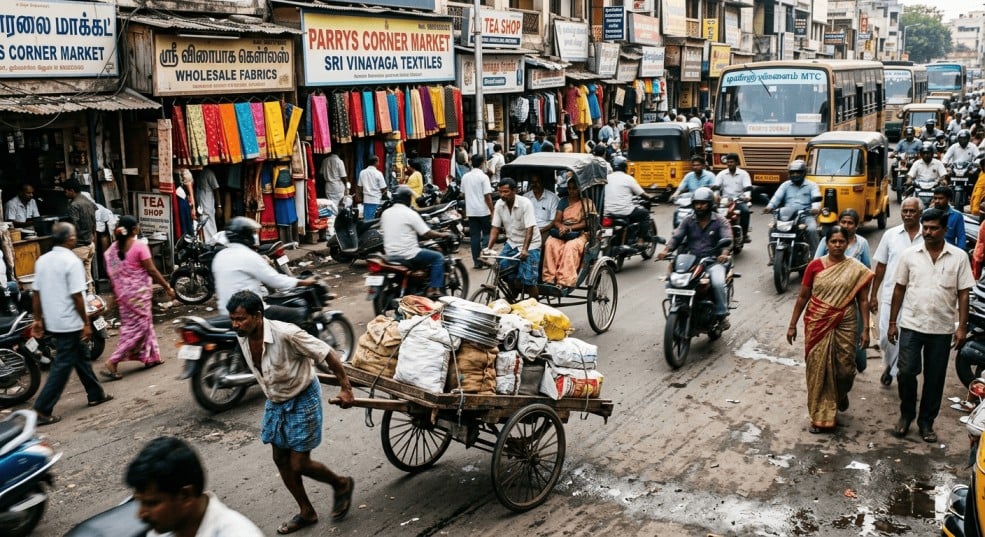
To understand why the British stayed, despite the lack of a harbor, you have to look at the fabric of the time. During your Georgetown Walk Chennai, you will pass lanes that were once the epicenters of a global fashion revolution. In the 17th century, the world went “Calico mad.” The hand-painted fabrics from the Coromandel Coast were the “luxury tech” of the 1600s.
Francis Day knew that the weavers of the Madras region were masters. The British didn’t just build a fort; they built a giant warehouse. They incentivised thousands of weavers to move into the “Black Town.” As you explore the textile markets on a Georgetown Walk Chennai today, you can still feel that frantic, commercial energy that turned a sandy strip into a global textile capital.
Part III: The Fortress of Desires and Fort St. George History
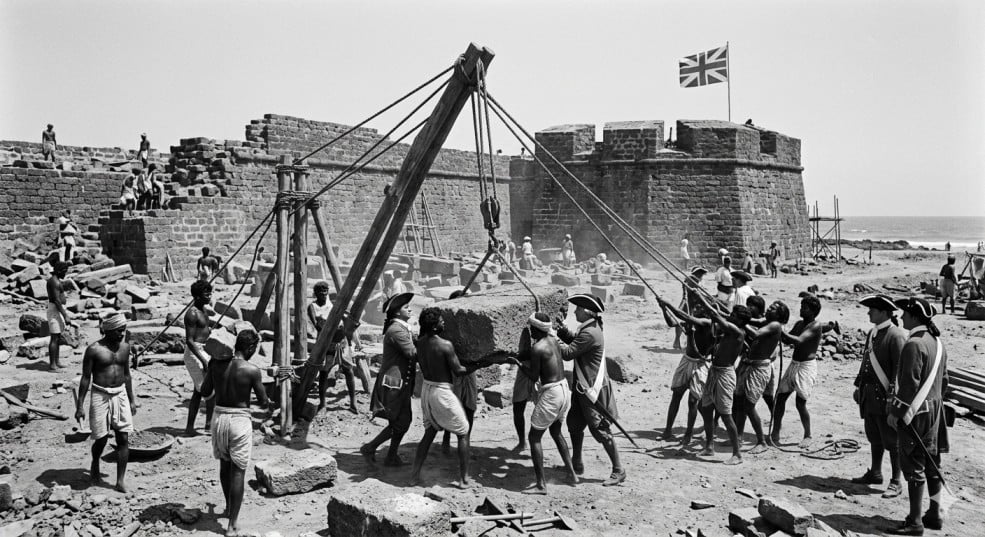
By 1640, the first stones were laid for Fort St. George, the first English fortress in India. It was designed as a “White Town”—a walled sanctuary. But the walls couldn’t keep the world out. While the British sat behind their cannons, a “Black Town” grew outside the walls. It was a cacophony of Tamil, Telugu, Portuguese, and English.
The Fort St. George history is often told as one of military might, but it was really a history of negotiation. The British needed the locals more than the locals needed the British. This symbiotic relationship created the DNA of modern Chennai, a story we peel back layer by layer on every Georgetown Walk Chennai.
Part IV: The Merchant Princes of Armenian Street
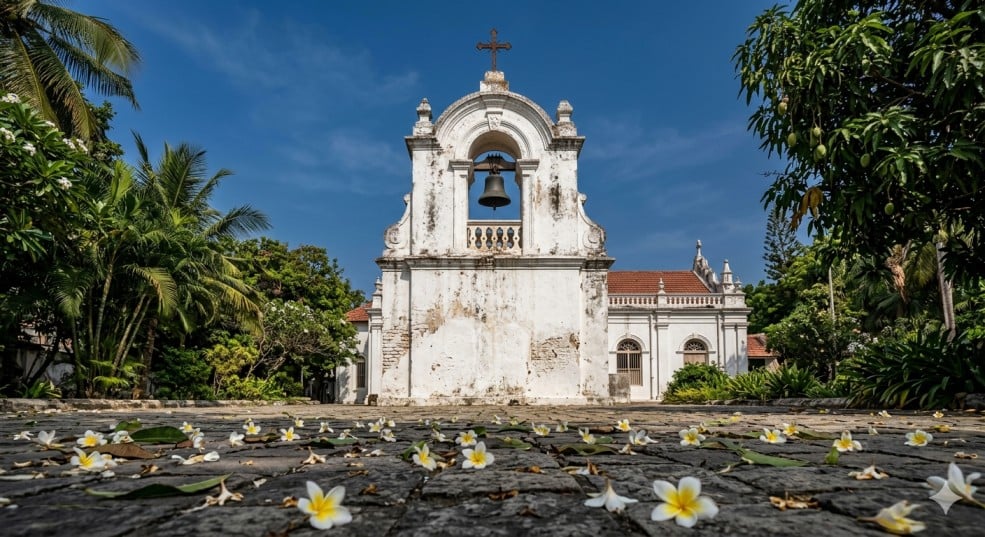
One of the most captivating stops on any Georgetown Walk Chennai is a quiet, leafy lane called Armenian Street. Why are there Armenians in South India? They were the original global nomads—the “Merchant Princes” who controlled the world’s wealth. Fleeing persecution in Persia, they found a home here.
The Armenian Church, built in 1712, stands as a silent witness. Its bells still ring out over the chaos. But look closer at the graves in the courtyard. They tell stories of men who travelled from Venice to Manila, choosing to settle in this “scandalous” little outpost founded by Francis Day. Without the Armenians, the British would have likely gone bankrupt.
Part V: The Dubash – The Secret Power Brokers of the Georgetown Walk Chennai
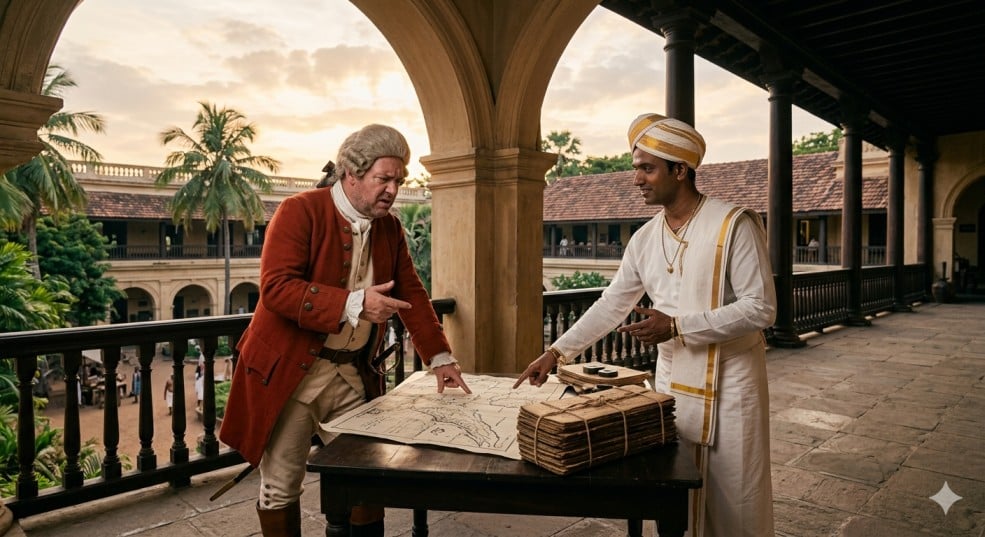
In the 2,000-year history of this region, few figures are as mysterious as the Dubash. The word means “someone who knows two languages.” These were the Indian middlemen who translated the culture for the British.
When you take a Georgetown Walk Chennai, you are walking through the former estates of men like Pachaiyappa Mudaliar. These men were often wealthier than the British Governors. They built temples, funded charities, and manipulated the East India Company like puppets. The British thought they were in charge, but the Dubashes ran the city. They were the ones who managed the “local girl” scandal and ensured the cotton kept flowing.
Part VI: The Scandalous Legacy of Francis Day
Was the “local girl” real? Historians like to play it safe, but in Chennai, folklore is often more accurate than the official record. Francis Day’s personal life was a mess of reprimands. He was accused of being “distracted” and spending too much time away from his post. To the Company, he was a headache. To the world, he was the man who accidentally started an empire because he couldn’t stay away from a woman in San Thome. The founding of Madras was an act of passion, and you can still see the remnants of that fire when you join a Georgetown Walk Chennai.
Part VII: A Culinary Revolution in the Bazaars
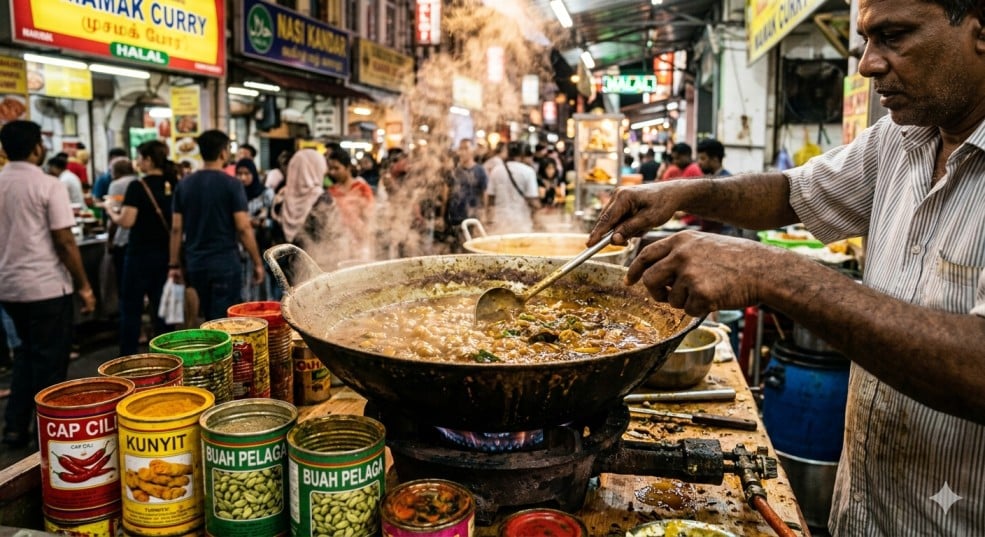
You cannot experience Georgetown without tasting it. The “unputdownable” nature of this neighborhood extends to its street food. The British brought their tastes, but the locals perfected them. The “Madras Curry Powder” known worldwide was essentially a British attempt to bottle the magic of the Georgetown spice markets. On our Georgetown Walk Chennai, we dive into the origins of “mulligatawny” and visit hidden messes that have served the same recipes for over a century.
For a mouth-watering food walk in Georgetown, visit Sowcarpet Food Street Walk.
Part VIII: The Ultimate Georgetown Walk Chennai Experience
Most tourists head straight to the beach. They miss the “real” Chennai. But the crowds of Georgetown are where the energy is. A Georgetown Walk Chennai is unputdownable because every street is a new chapter:
-
- Stringer Street: Home to the city’s printing legacy.
-
- Anderson Street: A sensory overload of jasmine and marigolds.
-
- Beach Road: Where grand colonial edifices remind you of British ambition.
Part IX: The Shadows of 1942 and Beyond
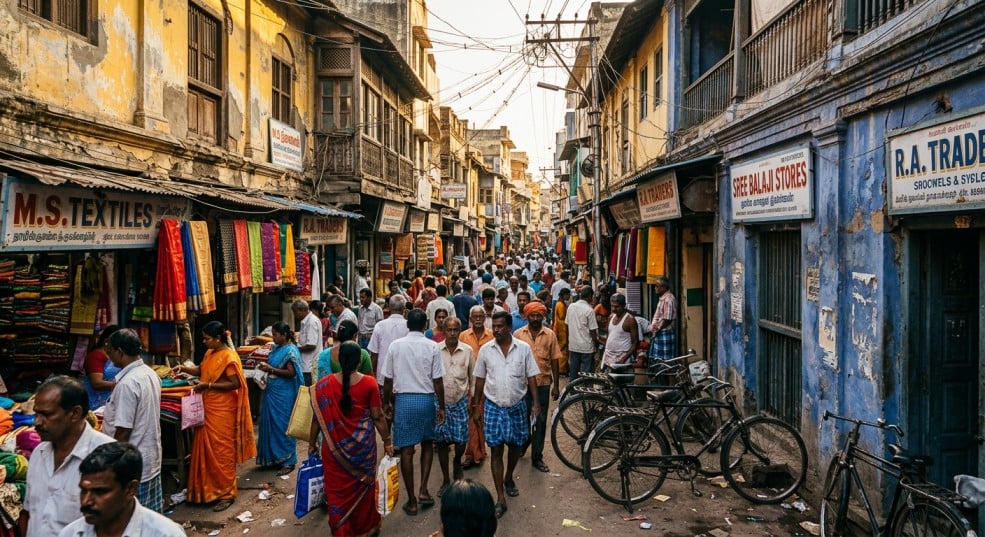
As the walk nears its end, we touch on a more modern suspense. During WWII, Chennai was the only city in India to be shelled by a German cruiser, the SMS Emden. The fear was so great that the city was largely evacuated. Standing in Georgetown, you can almost hear the sirens. The residents fled, leaving behind a ghost town. But like a phoenix, Georgetown rose again. This resilience is what makes it the “Mother of Madras.”
Conclusion: The City That Refused to Stay Small
Whether Francis Day chose this land for a woman or for the weavers, the result is the same: he chose a place that had a soul. Madras grew into a titan—a center of education, medicine, and culture. But at its heart, it is still that “romantic” patch of sand. Every time you walk through the narrow lanes of Georgetown, you are part of a 400-year-old conversation.
The shadows of the past are long in Georgetown, and the best way to see them is on foot. Don’t just visit Chennai. Experience the scandal, the trade, and the triumph. Our guides don’t just show you buildings; they tell you the secrets the walls are trying to keep.
Are you ready to walk the legend?
Experience the most captivating Georgetown Walk Chennai and see the side of the city the guidebooks forgot.
 Book your George Town Walk in Chennai here!
For a guided tour of Chennai city, please visit Cultural Immersion in Chennai.
Mahablipuram is a world heritage site and a must-visit. Click Mahabalipuram Experience for a day trip.
Leave a Reply